Showing posts with label book club. Show all posts

What I Thought About All of the Books I Read for Book Club This Year

Dec 19, 2020

You all know how much I love my book club. I joined it back when Aaron was just a toddle, and I have only missed a handful of meetings since then (even a scheduled induction the very next day couldn't keep me away). 

Four years ago, our book club was struggling to stay afloat. Although many people were on the list and received the emails about the meetings, only four of us read and discussed the book with any regularity. In a bold move, we decided the book club could use a revamp. 

We curated a group of women who were avid and dedicated readers, came up with a yearly outline of genres, and even drew up a list of rules like the true nerds we were.

And thus, the "scary" book club was born.

It has been so good for my soul. I love these smart, classy women so much. I love that no matter what we choose, people will actually read it and come to the meeting with sticky notes, tabs, background insights, and underlined sections ready to dive deep and discuss. It is everything I could have asked for in a book club.

Like most things this year, our little book club suffered because of the pandemic. We did our first zoom meeting in March during the week that everything shut down. (I can still remember when my friend sent out the group text that said, "Should we zoom this week instead?" And I said, "What's zoom?" Oh, my poor little naive self.)

At the time, we thought a virtual meeting would be a one, possibly two, time exception. But month after month, the texts continued to say the same thing, "See you on zoom on Thursday!"

I'm not going to say that virtual meetings were an acceptable replacement to the real thing. Please. Half the fun is getting together and snacking on delicious treats. Without this element, it felt much more like work or an assignment than in the past. Besides that, the stress of daily life caused many members to lose their reading mojo, especially if the book involved a difficult subject. 

But we did it. As we had our final meeting of the year last week, I looked over the thirteen squares on my computer screen, and I felt this sense of extreme pride. My book club can survive a pandemic! 

I thought it might be fun to look back over everything we read this year and reminisce just a little. I'd love to know if you've read any of these, either with a book club or solo. 

January: Lovely War by Julie Berry (Fiction) 5/5

Out of everything I read this year, this one is my top pick for 2020. So either everything went downhill from there, or it just kicked off a really great year of reading. I choose to think the latter. The best part was that I really had no idea I would like it so much. I knew very little about it going into it, except that Greek gods were somehow involved. Having never really enjoyed Greek mythology that much, I can't say that was a very big selling point for me. But somehow, that ended up being one of my favorite parts and elevated the story from just another World War I/II story to something really special. I wrote a whole review of it here, but basically it gets all of the praise, gold stars, and highest recommendations from me. 


February: Cold Sassy Tree by Olive Ann Burns (Relationship) 4/5

In February, we like to choose a book that focuses on relationships. It's kind of our nod to Valentine's Day without being overly sappy. We've read quite the variety of books, from nonfiction to fiction, over the years, and I always like examining them through the lens of relationships, which puts a slightly different spin on things from a typical discussion. Cold Sassy Tree was rich in relationships--romantic, familial, and friendship. I had never read it before and knew pretty much nothing about the plot. I loved the voice of the 14-year-old narrator, which was accurate and uncomfortable at the same time. The story unfolded in the most surprising way, and there was so much to discuss when we all gathered together (our last "real" gathering of the year). Full review is linked here.


March: Nothing to See Here by Kevin Wilson (Memoir) 3/5

Okay, let's get one thing straight from the beginning. This book is not a memoir (unless children who spontaneously go up in flames is part of someone's reality). But we read it for what was supposed to be a memoir month. The book that was originally slated for March was H is for Hawk by Helen Macdonald (which is indeed a memoir). However, in the weeks leading up to it, no one could dredge up any enthusiasm for it (even though we had all voted for it). We decided to make a last minute change--because sometimes that just feels right, and it's our book club so we get to make the rules. I felt like we should go with one of the other memoir choices for the month (because even if we make our own rules, I am still a rule follower at heart, and this was our memoir month). However, the majority of the members wanted to read Nothing to See Here by Kevin Wilson, which was a runner-up for July, our wild card month. And now, looking back, I find it eerily appropriate that we decided to read about a combustible set of twins during this month that set off our dumpster fire of a year.


April: The Secret Garden by Frances Hodgson Burnett (Classic) 5/5

This was the only book on this year's list that I had read before, but it was an absolute pleasure to return to it. I read it aloud to my kids, and we enjoyed every page. They loved Dickon (who doesn't?), and I loved Mrs. Sowerby (a worthy mentor if ever there was one). After we finished, we watched the 1993 movie, which was equally delightful. I was so grateful for the chance to reread this beloved classic and share it with my kids. Also, in my humble opinion, April is, and always will be, the best month in which to read this book. 


May: Raymie Nightingale by Kate DiCamillo (Middle Grade/Juvenile) 4/5

This happened to be the month that I was in charge of. The three books I originally recommended were The Bridge Home by Padma Venkatraman, Front Desk by Kelly Yang, and Raymie Nightingale by Kate DiCamillo. I think any of those would have made for a great discussion, but you just can't go wrong with Kate DiCamillo. Her tight prose and deep themes just never disappoint. I quite enjoyed jotting down potential questions while I was reading this book and considering different angles. But ask me how much I like leading a discussion over zoom. (Answer: not so much.) I have since read the second book in this trilogy, Louisiana's Way Home and enjoyed it just as much or even more. The third one, Beverly Right Here, has been checked out from the library twice, and I hope to make it a priority soon. 


June: Red Notice: A True Story of High Finance, Murder, and One Man's Fight for Justice by Bill Browder (Nonfiction) 3/5

As much as everyone at book club thought this story was fascinating, one of the things we couldn't seem to get past was the author's rather egotistical voice as well as some of his sexist comments. We spent a good ten minutes bashing him before moving onto the actual events that made this story so compelling. The funny thing is when I mentioned this indignation to Mike (who I had convinced to read the book), he was surprised by our reaction. He hadn't picked up on it at all, probably because he's a man. Regardless, this was a book that connected a lot of dots in the world news for me, and I've recommended it to my father-in-law, brother-in-law, and brother, so obviously I was able to overcome my personal grievances.


July: Maybe You Should Talk to Someone: A Therapist, Her Therapist, and Our Lives Revealed by Lori Gottlieb (Wild Card) 4/5

"Wild Card" is not an actual genre but we always dedicate one month out of the year to catch any books that don't fit into another category or that are just about something a bit unusual. Although this book definitely could have fit into our "memoir" or "nonfiction" months, its format was out of the ordinary. It was a mix of the author's own experiences in therapy, insights and techniques from being a therapist, and the contrasting experiences of her clients. I really loved the narrative style and the way the stories intertwined with one another. And it was really helpful to get the perspective of both client and therapist from one voice. Book club consisted of people swapping their own therapist stories alongside comments about the actual book. I felt like I didn't have much to contribute since I've never been to a therapist. But this book convinced me that I probably should. 


August: When Crickets Cry by Charles Martin (Fiction) 2.5/5

This was a bit of an uncomfortable read for me. I found it over the top in so many ways: too saccharine, too predictable, too sentimental, too preachy, too lofty, too dramatic. But the whole time I was reading it, I was thinking about the person who was leading the discussion in August; she had put in a major plug for this book when she said it was one of her favorites. Books are so personal, and I didn't know how I was going to be able to share my honest opinion without sounding offensive. But in the end, I didn't need to worry. This woman reread it in preparation for leading the discussion, and it didn't hold up for her on a second reading. She came to many of the same feelings as the rest of us, so we were able to just all briefly agree on that and then get down to discussing the intricacies of the plot. Sometimes the best discussions end up being for the books I didn't love.


September: Talking to Strangers: What We Should Know About the People We Don't Know by Malcolm Gladwell (Nonfiction) 3.5/5

I always love Malcolm Gladwell, and this book was absolutely fascinating, as I expected. Unfortunately, it depressed me quite a bit. The basic premise was that we, as humans, are not the best judges of character. We give credibility to certain cues, attributes, and characteristics that often actually lead us astray. Most of the stories Gladwell chose to illustrate these scenarios were intense and graphic and really disturbing. I already have a skeptical personality, but this book made me distrust even my closest friends and family members. This was not Gladwell's intent, but that was the effect it had on me. Still, it made for a really good book club discussion, and I've mostly recovered from reading it, haha. 


October: Beloved by Toni Morrison (Mystery/Suspense) 4/5

I know this is on many high school reading lists, but I somehow missed it until now. I'm not going to lie--it was a slow start for me. And even once it got going and I really started loving it, there were still moments when a description was a bit cryptic or the setting changed abruptly or the writing style moved into free verse, and I felt a little like I was floundering again before I regained my footing. The story was intense and heartbreaking and vacillated between the real and imagined. During our discussion, there were many questions of, "Do you think this really happened?" and "Was this person real?" It was a bit mystical, which made the harder subject slightly easier to cope with, and I almost had a sense of floating through this story, which was quite lovely. 


November: Star of the North by D.B. John (Historical Fiction) 4/5

I almost didn't read this book because I honestly didn't know if I could handle a book about North Korea right now. Plus, I had been really diligent about reading everything else this year, so I thought I could take a pass if I wanted to. But man, my upholder personality runs strong, and since I didn't have a good reason not to, I felt like I should at least give it a chance. I'm so glad I did. Although reading about North Korea did not exactly make me feel warm and fuzzy inside, the premise of a young woman being kidnapped off the coast of South Korea and her twin sister then sacrificing everything to find her was so captivating. Even though much of the book is based on real information about North Korea (I was shocked to find out that the seed bearing program referenced in the book was a real thing), the tone of the book felt more like a thriller than something that could actually happen. Because of that, it was more escapist than I was anticipating, and that ended up being a good thing.  


December: Annual planning and book exchange

Our meeting in December is used to plan out the schedule of books for the following year. Everyone claims a genre and then comes to the meeting with three choices. A summary of each book is given, and then we all vote on which one we'd like to read for that month. It is like Christmas for book lovers because not only do we get the eleven books for the year but also the twenty-two runners-up. After each spot has been filled, we have a little book exchange where we each give and receive a new book. This year, I brought As Bright as Heaven (but if I hadn't read it for this book club, I probably would have brought Lovely War). It makes me happy looking over our list of picks for 2021. No matter what the year brings, I have a feeling it's going to be a good year of reading. 

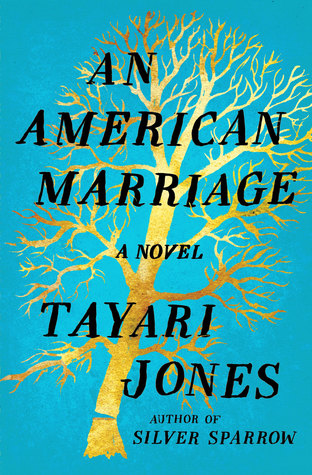
An American Marriage by Tayari Jones

Mar 1, 2019

33590210
If I had to choose one word to describe this book, it would be wrenching.


Gut wrenching. Emotionally wrenching. Heart wrenching.

Roy and Celestial have only been married a year-and-a-half when their lives change suddenly and drastically one night. They went to Roy's hometown to visit his parents, and their motel room door was forced open in the middle of the night and they were dragged from their bed. A woman a few doors down claimed that Roy broke into her room and raped her.

But Roy is innocent. He knows it, and, more importantly, his wife knows it. She hadn't even fallen asleep yet when their door burst open.

But the trial proceeds quickly. Unfortunately, Roy is a black man being accused by a white woman, and the timing and the circumstances are not in his favor. Roy is convicted without proper evidence. He is sentenced to prison for twelve years. (Side note: it never explicitly says that Roy's accuser is white. I assumed she was because her word was given more credibility than Celestial's testimony, but some of the women in my book club assumed she was black, so it was somewhat ambiguous. Regardless, Roy was convicted.)

At first, Celestial and Roy are unfailingly loyal to one another, pledging their devotion until either Roy serves out his sentence or his attorney (Celestial's Uncle Banks) gets him acquitted. But as time marches on, Celestial goes on living, and other things (and people) move into take Roy's place. After three years, she writes that she is done with their marriage; she has to move on; she wants to get a divorce. Except . . .months pass, and she never files for a divorce.

When Roy is finally released after five years, he doesn't know what he'll find and if it's even possible for a marriage that was still just in its infancy to be able to survive such a tragedy.

The story is told from three perspectives: Roy's, Celestial's, and Andre's (oh, I didn't mention him? He and Celestial have been friends ever since they were children. I'm sure you can guess why he's in the story . . .). Their voices are distinct, raw, and vivid. I loved the writing so much, and listening to the narration by Sean Crisden and Eisa Davis only enhanced it.

I won't pretend to know what it takes for a novel to move from best-seller to classic, or if the two are even related. But with the words still fresh enough to be ringing in my ears, this feels like the type that might last. I could see it being studied in literature classes decades from now. It just seems to have all of the right pieces to make something that's deep and mulit-layered and will keep giving each time you read it.

That said, I didn't love the ending. And not because it wasn't a happily ever after kind of ending. Celestial and Roy both move forward with their lives. Celestial's seemed natural and expected (probably because a big chunk of the book had been pointing that way), but Roy's seemed unlikely and maybe even fantastical. I'm not going to give it away here, but I'd be interested to know what you thought about it if you've read it. (As another aside, discussing this with the other ladies in my book club actually helped me resolve some of the issues I had with the ending, and I'm not as skeptical as I was when I first finished it.)

This was my book club's pick for February. We always try to select a book for this month that will have something to do with love and relationships. We've had some misses over the years, but this one was spot on perfect. Although there are some underlying themes of racism and equality, the heart of the book is about relationships and what happens to those relationships when life throws its punches.

At one point, Celestial says: "Marriage is like grafting a limb onto a tree trunk. You have the limb, freshly sliced, dripping sap, and smelling of springtime. And then you have the mother tree stripped of her protective bark, gouged and ready to receive this new addition." Part of the problem for Celestial and Roy was that their limb and trunk hadn't been together for long enough before the graft was put under extreme stress.

But back to my original word: wrenching. I became so deeply invested in the characters, and it was painful to watch all of the choices and circumstances play out and just wonder, "What if . . . ?" What if Roy hadn't been convicted? What if he had gotten out sooner? What if he and Celestial had been married longer first? What if? What if? What if?

It was those plaguing questions that kept me listening, and the unsatisfactory answers that kept me thinking long after I finished.

Content note: This is a heavy story. There is some language, including the F-word. There is also infidelity, including one descriptive scene that I chose to skip over.

The Book Blab Episode 18: Books for Book Club Plus Two Perfect Summer Reads

Jul 30, 2018

When Suzanne and I last chatted, we talked about everything you need to know to start a book club . . . except for the books you might actually want to read at said book club! That's what today's episode is for. Consider this a part two (in fact, you might want to watch part one first if you missed it). It's chock-full of book recommendations (although we did try to show some restraint), and it was fun to get to the heart of what makes a book a great choice for a book club discussion (spoiler: it's not always your favorite book). As always, we'd love to hear YOUR thoughts. What have been some of your favorite books to discuss with your book club?


0:24 - Summer update
1:35 - Today's topic: What makes a good book club book?
2:25 - Tips for choosing books for book club:
  • 2:47 - Favorite books don't always make for a good discussion
  • 3:55 - Choose a book that generates opposite opinions or strong feelings
  • 6:35 - Some ambiguity in the plot/ending encourages discussion
  • 8:15 - This is a simple indicator for knowing if a book will be good for book club
  • 9:58 - Take the length of the book into consideration
  • 12:45 - Be careful of choosing a bestseller 
  • 15:30 - Check if your library has book club sets
  • 16:12 - Identify the unique tastes and interests and commitment levels of your book club
  • 17:22 - Nonfiction is generally a safe choice
18:50 - A few of our favorite book club books
28:17 - Two recommendations for summer reading
  • 29:03 - Suzanne's recommendation 
  • 31:20 - Amy's recommendation
32:32 - Conclusion

Books and links talked about during the show:

The Book Blab Episode 17: Book Clubs (Part One)
State of Wonder by Ann Patchett
The Children Act by Ian McEwan (Amy's review)
A Prayer for Owen Meany by John Irving (Suzanne's review)
Educated by Tara Westover (Suzanne's review)
America's First Daughter by Stephanie Dray and Laura Kamoie
The Wolves at the Door: The True Story of America's Greatest Female Spy by Judith L. Pearson (Amy's review)
 The Life Changing Magic of Tidying Up by Marie Kondo (Amy's review // Suzanne's review)
Most Dangerous: Daniel Ellsberg and the Secret History of the Vietnam War by Steve Sheinkin (Suzanne's review)
Bomb: the Race to Build--and Steal--the World's Most Dangerous Weapon by Steve Sheinkin (Amy's review // Suzanne's review)
The Light Between Oceans by M.L. Stedman (Amy's review // Suzanne's review)
Go Set a Watchman by Harper Lee (Suzanne's review)
Just Mercy by Bryan Stevenson (Amy's review)
Half the Sky by Nicholas D. Kristof and Sheryl WuDunn (Suzanne's review)
Jefferson's Sons by Kimberly Brubraker Bradley (Amy's review)
The Truth According to Us by Annie Barrows (Suzanne's review)
The Penderwicks by Jeanne Birdsall
Summer of the Monkeys by Wilson Rawls (Amy's review)

Now it's your turn: Share your favorite book club reads, and tell us what we should talk about next time on The Book Blab!

The Book Blab Episode 17: All Things Book Clubs Plus Two of Our Favorite Books for Mother's Day

May 10, 2018

Well, that was kind of a long hiatus, but Suzanne and I are finally back with another episode of The Book Blab! This one was worth the wait though, I promise.

Long-time readers will know that I have been a dedicated member of my book club (actually, several) for many years. Suzanne, it turns out, is the same, and between the two of us, we have quite the array of experiences. We had fun reminiscing about the various book clubs we've participated in, and we also shared a few tips and tricks for how to make a book club work no matter your situation.

The time flew, as it always does, and so we never got around to actually talking about the kinds of books that work well in a book club, so stay tuned for part two of this discussion!

As always, we'd love to hear about what your experience in a book club has been like, what some of your favorite book club reads have been, and why you think book clubs are so amazing (because you do think they're amazing, right?!).

Enjoy! (Oh, and p.s., please excuse the little technical glitches in this episode. We had a bit of a slow connection.)


1:00 - Life updates
1:50 - Today's topic: book clubs
2:40 - Why would you want to be in a book club?
  • 3:20 - A book club lets you discuss those books that beg to be discussed
  • 4:08 - A book club helps you see a certain book in a new way
  • 4:16 - It's fun to socialize with other readers
  • 5:10 - A succinct answer to that question
5:58 - A few descriptions of some of the book clubs we've been in
  • 6:17 - Suzanne's traditional book club in Chicago
  • 7:50 - Suzanne's casual book club in Houston
  • 8:03 - Suzanne's Learning Circle through the Power of Moms organization
  • 9:22 - Amy's education group
  • 10:15 - Suzanne's brand new book club in Kansas City
  • 10:33 - Suzanne's virtual book club with former college roommates
  • 11:57 - Amy's neighborhood book club
  • 12:58 - Amy's very traditional, very serious book club
  • 15:55 - Amy's family reunion book club
  • 17:00 - Suzanne's family book club (and surprising confession!)
  • 17:53 - Amy's plans for a book club with her kids this summer
  • 19:30 - The Book Blab mini-book clubs
20:18 - Helpful tips for making a book club work well
25:36 - A few ideas for how to start a book club
29:26 - Two of our favorite books about motherhood
  • 30:05 - Suzanne's recommendation
  • 31:20 - Amy's recommendation
33:47 - Conclusion

Books and links talked about during the show:

The Read-Aloud Family by Sarah Mackenzie
Power of Moms Learning Circles
Till We Have Faces by C.S. Lewis
Angle of Repose by Wallace Stegner
The Four Tendencies by Gretchen Rubin
Mini-book clubs on The Book Blab (Episode 6 on A Man Called Ove and Episode 13 on The Girl Who Drank the Moon)
Educated by Tara Westover (Suzanne's review)
The Snow Child by Eowyn Ivey (Amy's review // Suzanne's review)
The Prize Winner of Defiance, Ohio by Terry Ryan (Amy's review)

Three Recent Book Club Reads: Hillbilly Elegy, Between the World and Me, A House in the Sky

Jun 23, 2017

I belong to a fabulous book club of smart, insightful women. Each month it is seriously a treat to gather together and hash out our thoughts and opinions about a particular book and ask ourselves deep (or, as the case may be, shallow) questions about life and all its complexities.

Most of the time, I write a book review to help myself sort out my feelings and process my thoughts after I've finished a book. But in the case of these books, I've already had a chance to do all that with my fellow bibliophiles. However, I never feel like I can quite let go of a book until I've written down a few thoughts (no matter how brief).

1. Hillbilly Elegy: A Memoir of a Family and Culture in Crisis by J.D. Vance

J.D. Vance says this book is about "what goes on in the lives of real people when the industrial economy goes south. It's about reacting to bad circumstances in the worst way possible. It's about a culture that increasingly encourages social decay instead of counteracting it."

This is the culture that Vance grew up in in Ohio and Kentucky in the 1980's and 90's. His home was poor and dysfunctional, and Vance bounced between his mother (and her many boyfriends/husbands), his father, and his grandparents. Rather than following almost all of his peers, Vance was able to break the cycle (which he credits his grandparents, particularly his grandmother, for). He joined the Marines and later graduated from Yale Law School. This is his intimate look at the spiraling society many white working class Americans live in, what is causing it, and how they can get out of it.

Vance's maternal grandmother ("Mamaw") has quite the fiery temper and the tongue to go along with it. When Vance's mother was a child, her parents had epic fights where it's a wonder neither one of them was killed. One time Mamaw told Papaw that he'd better never come home drunk again or she'd kill him. It only took one week before he'd forgotten the threat and was passed out on the couch. Mamaw, ever true to her word, poured gasoline all over her sleeping husband and lit him on fire. Luckily one of their daughters was nearby (can you imagine being a witness to this at eleven years old?) and quickly put out the fire and saved her dad.

That's just one example of the kind of home Vance grew up in, and even though his grandparents had calmed down considerably by the time he was a kid (they decided it would be safer for all parties involved if they didn't live together), his mother followed in their disastrous footsteps.

This book received a lot of attention last year as people tried to make sense of the presidential election and figure out why Donald Trump was doing so well. Vance didn't write it as a social commentary on this large percentage of voters; it was just a timely coincidence. For my part though, while I found it to be a fascinating look at a slice of American culture, I didn't think it did much to answer the election question.

Content warning: violence, abuse, and hefty use of the F-word

2. Between the World and Me by Ta-Nehisi Coates

I have to admit, this was not a fun book to read, and I feel very uncomfortable even attempting to rate or review it as I'm afraid my words will be misunderstood. It's written as a letter from Ta-Nehisi Coates to his son about the racial prejudices that have shaped America over the last several hundred years but specifically about how those prejudices still influence American culture today. The tone of the book is bitter, accusing, and judgmental, and as a middle class white woman, it made me feel uncomfortable and defensive.

So instead of saying much about it, I'll just share a few quotes that hopefully represent the nature of the book as a whole:
"Here is what I would like you to know: In America, it is traditional to destroy the black body. It is heritage."

"This is why your grandparents banned Tarzan and the Lone Ranger and toys with white faces from the house. They were rebelling against the history books that spoke of black people only as sentimental firsts: first black five-star general, first black congressman, first black mayor--always presented in the bemused manner of a category of Trivial Pursuit. Serious history was the west and the west was white."

Black parents to children: "Be twice as good."
White parents to children: "Take twice as much."

"And I saw that what divided me from the world was not anything intrinsic to us but the actual injury done by people intent on naming us, intent on believing that what they have named us matters more than anything we could ever actually do. In America, the injury is not in being born with darker skin or fuller lips or a broader nose, but in everything that happens after."
I felt defensive because he made these sweeping, blanket statements about white Americans that didn't describe the way I look at or treat people at all, and yet, I felt guilty because he was speaking the hard truth about our culture in general, and the truth hurt. I have to believe that there are many black people out there who don't feel as embittered as he does, but it doesn't change the fact that we still have a long way to go in treating all humans fairly and with kindness.

And I had to wonder what he would have thought of twelve middle-class white women sitting in a comfortable, average home in Utah, dressed nicely and eating refreshments, and discussing his book. I have a feeling he might not have appreciated it.

3. A House in the Sky by Amanda Lindhout and Sara Corbett

I read this one right after Ian was born. It's a hard, dark story, and even though I found myself with plenty of time to read, I had to alternate between this and a couple of other books simply because it was almost too much to handle in large doses.

In 2009, Amanda Lindhout was traveling in Somalia when she and her friend, Nigel, were abducted by a group of masked and armed men. (The details as to why she was in Somalia in the first place are too many to go into here, but just know she was well aware of the danger she was putting herself in when she first stepped off the plane.) For the next 460 days (15 months), she and Nigel were held captive for a large ransom. The things they experienced spanned the spectrum of sad, disturbing, and absolutely horrific. When I closed the book after the final chapter, the only thing I could think is, The resiliency of the human spirit is amazing (and closely followed by, Could I have endured like she did?).

For most of the time she's in captivity, Amanda feels like she's mere millimeters away from the breaking point, and she's not exactly sure what will happen when that moment comes--will she commit suicide or lash out at her captors or go certifiably crazy? But I found it so interesting that when that moment finally comes (because you better believe that it does), the outcome is empathy and compassion towards those who have tortured her, which you would never ever expect. Amanda said,
"What had just passed? I had no idea. Whatever it was, it unsettled me. In the moment, it had felt perfectly rational and even profound, like the lifting of some great curtain, the flash of a hidden truth. But now my mind started to analyze, attempting to hammer what had happened into words and structure, and the thing itself resisted. I couldn't shape it or explain it. I could only live with it, this new feeling, complicated as it was."
When a book has a co-author like this one does, I always wonder how much of the writing is influenced by him or her? In this case, the writing was actually quite gripping (and not just because of the intense nature of the story), and I was especially impressed with the pacing. When you have so many bad things happen, I think it's easy to use up your superlatives pretty quickly, but in this case, I always felt like there was still somewhere for the story to go (even though that tragically meant there were more atrocities to come). Whether it was Amanda Lindhout or Sara Corbett who deserves the credit for the writing, it was nevertheless quite captivating.

Content warning: rape, torture, violence, language. This is not an easy read. 

I don't know that any of these are books I would have chosen to read on my own, but they ended up being quite thought-provoking and made for some really great discussions.

What have been some of your favorite book club reads?
Proudly designed by Mlekoshi playground