My father-in-law and I were swapping book recommendations one evening a few months ago. Although we both read quite a bit, it isn't too often that our book tastes cross paths. (We both love history, but he wants it dense with facts while I prefer it laced with emotion and drama.)
But one of the books he mentioned caught my attention. He said it was about why the world needs people who haven't limited themselves to one area but have developed broadly across a wide range of disciplines. As a parent who is always wondering if it's "too late" for one of my kids to try something or if we've made a lifetime commitment to something just because we've done it for six months, I was totally intrigued by this idea.
I also knew immediately, without even reading it, why my father-in-law loved it.
Because he raised nine generalists.
Mike and each of his eight siblings grew up trying a variety of sports, instruments, clubs, and activities. Their parents pushed them very little. If they wanted to try something, it was up to them to figure out a way to get there and sometimes they were responsible for paying for it too. If they wanted to quit and move onto something else, that was seen as both acceptable and normal.
Although some of Mike's siblings have been to known to complain about the lack of visible support or encouragement, it cannot be denied that every single one of them is talented, diverse, and not in the least afraid to try new things. Because of that, I would want any of them on my team, no matter the subject. There is not a better representation of a well-rounded individual than Mike and his brothers and sisters.
While I was in the middle of this book, Mike heard about a problem that one of my friends was having with the diapers for her daughter. Mike said, "The engineer in me says someone needs to design a better diaper." Before I even knew what was happening, boxes of diaper-making supplies started showing up on our porch.
I laughed and teased Mike for thinking he could design something that people who have diaper design as their job had failed at.
But then I read about InnoCentive, an organization that "facilitates entities in any field acting as 'seekers,' paying to post challenges, and rewards for outside 'solvers.'" Basically the idea is that if you have an unsolvable problem, you can post the challenge to this website, and then solvers across all disciplines and demographics can bring their own expertise to the table to come up with solutions.
The company was founded by Alph Bingham, a chemist who used to work for Eli Lilly. In 2001, as VP of research and development strategy, he "collected twenty-one problems that had stymied Eli Lilly scientists." He asked if he could post them on a website for anyone to see. Some of the scientists thought the problems were too confidential and also wondered at Bingham's audacity in proposing that just your average Joe could solve a problem that had evaded the most highly-trained and highly-specialized chemists. And yet, after Bingham launched the problems, answers started rolling in: "Strangers were creating substances that had befuddled Eli Lilly chemists. As Bingham had guessed, outside knowledge was the key." He said, "It validated the hypothesis we had going in, but it still surprised me how these knowledge pockets were hidden under other degrees. I wasn't really expecting submissions from attorneys."
I found this chapter, "The Outsider Advantage," so fascinating. And after reading it, I went to Mike and said, "You know what, on second thought, you might be the perfect person for fixing this diaper conundrum. You go for it."
The author made a point that I've thought about again and again since finishing this book. He said, "The bigger the picture, the more unique the potential human contribution. Our greatest strength is the exact opposite of narrow specialization. It is the ability to integrate broadly." In other words, if we put all of our time and energy into becoming highly specialized, then robots are going to put us out of a job. We can develop a machine to analyze data and solve problems with a narrow focus. It is our ability to gather and integrate information and think outside the box that makes us valuable. Gary Marcus (a psychology and neuroscience professor) said, "In narrow enough worlds, humans may not have much to contribute much longer."
One of the things I really loved about this book was the way that David Epstein approached this topic from many different angles. The book began with two prominent sports figures (Tiger Woods and Roger Federer), who represented opposite sides of the specialist to generalist spectrum. Knowing that David Epstein was a sports writer, I was a little worried that with an opening like that, this book would have a high concentration of sports examples.
But that was not the case at all. Epstein brought in stories from all walks of life (chess, music, science, sports, academics, medicine) and across cultures and history (18th-century Venice to Japan at the turn of the 21st century to Hungary right after World War II). It felt like Epstein took his own advice and didn't limit his analyzation of this topic to his own area of interest and expertise.
I had to laugh when I was at book club talking about this book. First of all, I was one of only two people who had finished it. Everyone said it was a little slow or too technical. They were interested in the general premise, but when it came right down to actually reading it, they preferred a summary. (This was not my "serious" book club, in case you were wondering.) I didn't feel that way about this book at all, but maybe that's because I listened to it (and at double speed, too).
Anyway, one of the women (the one who had actually read the whole thing) said, "It was interesting, but . . . it's just that he kept talking about chess. And I don't care anything about chess!" I maybe shouldn't have, but I actually retorted, "Isn't that the whole point of the book? That we don't limit ourselves to just our pet interests but read and learn about other areas? That we have range?" In fact, the author quoted someone who said that exact thing--that every day we should challenge ourselves to read about or explore a topic that isn't in our preferred genre. I found my book club to be an interesting social experiment. Much as we might like the idea of developing a broad range of skills, it is challenging to actually break out of our comfort zones. I will be the first to admit that I like what I like and would often like to just continue what I'm doing and not rock the boat.
That said, I felt somewhat empowered after reading this book. I often feel guilty that I got my bachelor's degree in something that I don't feel particularly passionate about. I mean, I thought I was passionate about it at the time, but I realized pretty quickly into it that my interest level did not match those of my peers. Maybe I should have switched majors at that point. But I actually quite enjoyed my time . . . I just wouldn't go back into the same field. This book validated and normalized those feelings. I am not tethered to that area just because I chose it once, and those skills will go with me in whatever I want to try next.
The author quoted psychologist Dan Gilbert, who said, "We are works in progress claiming to be finished." This book helped me realize that who I am now doesn't have to be who I am tomorrow. I am a fluid being, a work in progress, taking in information and transforming it into something else.
When Maxwell was in third grade, I was complaining because I had a little cold. I said something like, "Why do I have to have this cold?" And Max, taking my question seriously, said, "I don't know. I haven't studied biology very much." I replied, "Maybe someday you'll want to be a doctor and help with these kinds of things." Max quickly said, "Oh I don't think so. You see, I've already devoted a lot of time to becoming an entomologist."
At eight years old, Max had already decided that he was well on the path to becoming an entomologist. But the beauty of life is that if he changes his mind at 12 or 21 or 35, he can do that. And you never know, maybe his knowledge of goliath beetles will help him find a cure for cancer.
Because that's what range can do.
Showing posts with label Adult. Show all posts
Cold Sassy Tree by Olive Ann Burns
Feb 29, 2020
Just a heads up: In the course of this review, I mention a couple of things that might be considered spoilers, so continue at your own risk.
When I was a kid, I can remember seeing both A Tree Grows in Brooklyn and Cold Sassy Tree on our bookshelves. Not knowing anything about either of them, I kind of thought of them as the same book--probably because they both had the word "tree" in their titles.
As an adult, I eventually picked up A Tree Grows in Brooklyn almost ten years ago, and I fell in love with everything about it. But Cold Sassy Tree remained unread, even though it seemed to get tossed around quite often as a suggestion at various book clubs over the years. It finally landed when my book club planned out our reading for 2020 and voted to read it in February for the relationships genre.
And surprisingly, even though the protagonists, storylines, and settings are markedly different between the two books, there was something about the writing that actually did end up reminding me of A Tree Grows in Brooklyn. Maybe it was just all in my head from my association with the two books in my childhood, but a certain quality under the surface seemed to resonate in each of these two books. Maybe it is just that both of them seem to exude that sharp and vibrant writing style that marks them as a modern classic. (Other books that have a similar feeling to me: Crossing to Safety, To Kill a Mockingbird, and East of Eden.)
The story is told from the 14-year-old perspective of Will Tweety in 1906. He lives in the town of Cold Sassy, Georgia with his mother, father, sister, grandma, grandpa, aunt, uncle, and cousin. His grandfather, E. Rucker Blakeslee, owns the general store and is well respected in the community.
That is, well respected until his wife, Mattie Lou, passes away and, not three weeks after her funeral, he elopes with the milliner, Miss Love Simpson. Mary Willis and Loma (Will's mother and aunt) are so mortified and ashamed of their father. They'll have absolutely nothing to do with Miss Love.
But Will likes her. She is kind and young (more than 20 years Mr. Blakeslee's junior), and so pretty. Ostracized from the rest of the town, she takes Will into her confidence, explaining that the marriage was really a business arrangement. Mr. Blakeslee gets a housekeeper, and she gets deeded the house and the furniture after his death.
But regardless of what it started out as, it is soon clear to Will that his grandfather has strong feelings for Miss Love, and Miss Love is slowly but surely reciprocating.
I don't know what I was expecting exactly, but this story unfolded in the most surprising way. Remember, it was told through the eyes of a 14-year-old boy; and while I didn't always enjoy being in the head of said 14-year-old (ahem, puberty), I have to admit that it cast the story in an interesting and compelling light. It felt so authentic and real that I couldn't quite fathom how a 60-year-old woman had written it.
Speaking of which, I enjoyed the writing style so much that I looked up Olive Ann Burns after I was finished to see what else she had written. Tragically, much like Harper Lee, it looks as though she was a one-book wonder. But I can't help but think that if her one and only book was this good, imagine what else she might have produced.
One of my favorite characters was Mr. Blakeslee. I loved the way he pushed against social constructs and laid aside conventionality in favor of what he deemed was right or proper . . . or just what he selfishly wanted. For example, when Miss Love is dismissed from being the Methodist pianist, he sees it as an opportunity to have a good time, just the two of them, singing and preaching together. (His religious views were rather unorthodox as well, but I loved them.) At another point, after Will's Uncle Campbell commits suicide, rather than making the whole affair feel shameful and unforgivable, Mr. Blakeslee pours out compassion and expects the whole town to come along with him in honoring the man. (It's quite possible that his actions were also a reflection of the guilt he felt, but it helped the town move forward in a positive way nonetheless.)
The most tender moment for me, and the one I'll probably always remember from this book, occurred when Will read the suicidal note from his uncle. The P.S. said, "I fixed the faucet," which alone about broke my heart since it was something his wife, Loma, had been nagging him to do for a long time. But then Will noticed that "even as I stood there holding his sweet and lonely words, I heard water going 'drip, drip, drip' into the bathtub." It was too much for me. It made me so sad to think that this man felt like he couldn't do anything right, and then, just before he took his own life, he tried to do something that would make his wife happy. But it hadn't worked; the faucet was still dripping. But then Will, in spite of all of his mischievous and naughty ways, picked up the wrench and changed the washer because, in his words, "nobody was going to say Campbell Williams was so sorry that he couldn't even fix a faucet." There were many heartbreaking moments in this story, but this one--this is the one that got to me.
I listened to the audio version of this book, and I thought it was fantastic. I never even cracked the cover of the actual book, so I never saw what the text was like. To me, the southern accents just flowed easily and naturally. But after going to book club and hearing about the experiences of those who had chosen to read rather than listen, I felt like I made the right choice. Apparently, the dialogue, which had been so engaging for me, was a bit of a beast to read when written out.
I was surprised to find out that this book was published in 1984. For some reason, I expected it to be older than that. I think it has that timeless feel that makes it difficult to place in a certain decade. I can see why many people think of it as a modern classic. It is multi-layered and vivid and just so real.
When I was a kid, I can remember seeing both A Tree Grows in Brooklyn and Cold Sassy Tree on our bookshelves. Not knowing anything about either of them, I kind of thought of them as the same book--probably because they both had the word "tree" in their titles.
As an adult, I eventually picked up A Tree Grows in Brooklyn almost ten years ago, and I fell in love with everything about it. But Cold Sassy Tree remained unread, even though it seemed to get tossed around quite often as a suggestion at various book clubs over the years. It finally landed when my book club planned out our reading for 2020 and voted to read it in February for the relationships genre.
And surprisingly, even though the protagonists, storylines, and settings are markedly different between the two books, there was something about the writing that actually did end up reminding me of A Tree Grows in Brooklyn. Maybe it was just all in my head from my association with the two books in my childhood, but a certain quality under the surface seemed to resonate in each of these two books. Maybe it is just that both of them seem to exude that sharp and vibrant writing style that marks them as a modern classic. (Other books that have a similar feeling to me: Crossing to Safety, To Kill a Mockingbird, and East of Eden.)
The story is told from the 14-year-old perspective of Will Tweety in 1906. He lives in the town of Cold Sassy, Georgia with his mother, father, sister, grandma, grandpa, aunt, uncle, and cousin. His grandfather, E. Rucker Blakeslee, owns the general store and is well respected in the community.
That is, well respected until his wife, Mattie Lou, passes away and, not three weeks after her funeral, he elopes with the milliner, Miss Love Simpson. Mary Willis and Loma (Will's mother and aunt) are so mortified and ashamed of their father. They'll have absolutely nothing to do with Miss Love.
But Will likes her. She is kind and young (more than 20 years Mr. Blakeslee's junior), and so pretty. Ostracized from the rest of the town, she takes Will into her confidence, explaining that the marriage was really a business arrangement. Mr. Blakeslee gets a housekeeper, and she gets deeded the house and the furniture after his death.
But regardless of what it started out as, it is soon clear to Will that his grandfather has strong feelings for Miss Love, and Miss Love is slowly but surely reciprocating.
I don't know what I was expecting exactly, but this story unfolded in the most surprising way. Remember, it was told through the eyes of a 14-year-old boy; and while I didn't always enjoy being in the head of said 14-year-old (ahem, puberty), I have to admit that it cast the story in an interesting and compelling light. It felt so authentic and real that I couldn't quite fathom how a 60-year-old woman had written it.
Speaking of which, I enjoyed the writing style so much that I looked up Olive Ann Burns after I was finished to see what else she had written. Tragically, much like Harper Lee, it looks as though she was a one-book wonder. But I can't help but think that if her one and only book was this good, imagine what else she might have produced.
One of my favorite characters was Mr. Blakeslee. I loved the way he pushed against social constructs and laid aside conventionality in favor of what he deemed was right or proper . . . or just what he selfishly wanted. For example, when Miss Love is dismissed from being the Methodist pianist, he sees it as an opportunity to have a good time, just the two of them, singing and preaching together. (His religious views were rather unorthodox as well, but I loved them.) At another point, after Will's Uncle Campbell commits suicide, rather than making the whole affair feel shameful and unforgivable, Mr. Blakeslee pours out compassion and expects the whole town to come along with him in honoring the man. (It's quite possible that his actions were also a reflection of the guilt he felt, but it helped the town move forward in a positive way nonetheless.)
The most tender moment for me, and the one I'll probably always remember from this book, occurred when Will read the suicidal note from his uncle. The P.S. said, "I fixed the faucet," which alone about broke my heart since it was something his wife, Loma, had been nagging him to do for a long time. But then Will noticed that "even as I stood there holding his sweet and lonely words, I heard water going 'drip, drip, drip' into the bathtub." It was too much for me. It made me so sad to think that this man felt like he couldn't do anything right, and then, just before he took his own life, he tried to do something that would make his wife happy. But it hadn't worked; the faucet was still dripping. But then Will, in spite of all of his mischievous and naughty ways, picked up the wrench and changed the washer because, in his words, "nobody was going to say Campbell Williams was so sorry that he couldn't even fix a faucet." There were many heartbreaking moments in this story, but this one--this is the one that got to me.
I listened to the audio version of this book, and I thought it was fantastic. I never even cracked the cover of the actual book, so I never saw what the text was like. To me, the southern accents just flowed easily and naturally. But after going to book club and hearing about the experiences of those who had chosen to read rather than listen, I felt like I made the right choice. Apparently, the dialogue, which had been so engaging for me, was a bit of a beast to read when written out.
I was surprised to find out that this book was published in 1984. For some reason, I expected it to be older than that. I think it has that timeless feel that makes it difficult to place in a certain decade. I can see why many people think of it as a modern classic. It is multi-layered and vivid and just so real.
Upstairs at the White House: My Life With the First Ladies by J.B. West
Jul 3, 2019
When I was growing up, my mom always tuned into Paul Harvey on the radio while she was making lunch. Besides the news and interesting stories, he also had a segment called The Rest of the Story where he revealed the little known history behind famous and well-known events.
This book was a little like that radio segment, giving a backdoor view of some of America's First Families.
J.B. West served as Assistant to the Chief Usher and then later as Chief Usher of the White House from 1941 to 1969. I have to admit, before I read this book, I didn't even know there was such a position as "Chief Usher," but basically Mr. West's job was to work directly with the First Ladies, helping each one make the White House her home, ensuring that social events ran smoothly, overseeing the staff, and generally helping with all of the ins and outs of daily life. As such, he had a unique view of the President of the United States and his family, one that was often more personal than was portrayed by the media.
During his time at the White House, he served Eleanor Roosevelt, Bess Truman, Mamie Eisenhower, Jacqueline Kennedy, Lady Bird Johnson, and Pat Nixon. As each presidency turned over, Mr. West introduced the reader to the new First Lady and immediately shared little anecdotal stories that helped create a clear impression of this woman that contrasted sharply with all of the others. These women did not run together in a blur of First Ladies. Each one was uniquely her own person.
As I neared the end of the book, I wrote down the name of each First Lady and any words that came to mind that would help me remember her. These are merely my own observations and as such are not necessarily an accurate or complete representation of these women:
Eleanor Roosevelt: somewhat aloof, very busy, boundless energy, politically active, more interested in things outside of the White House than in it, distant relationship with the President
Bess Truman: simple, practical, not flashy, well-informed, adviser, private, very much in love with her husband and daughter
Mamie Eisenhower: vivacious, spunky, sparkly, opinionated, formal, elegant, high-class, openly affectionate
Jackie Kennedy: quiet, unassuming, sophisticated, witty, ambitious, educated, dedicated to history and the fine arts, unemotional
Lady Bird Johnson: selfless, people-pleaser, social but private, loyal, friendly, hands off but particular
Pat Nixon: reserved, decisive, warm (J.B. West only worked for her for six weeks, so she was the least well-known.)
One of the things that surprised me was how much freedom the First Ladies had to change around the White House and make it work for their families: bedrooms into dining rooms, the swimming pool into a press room (J.B.West's biggest regret), walls torn down and new ones built, a schoolroom designed for Caroline Kennedy and later transformed into a teenager hangout for Lucy Johnson, trees planted for privacy, furniture swapped in and out, a whole network of phone lines added, and the plumbing completely reworked to get strong enough water pressure for Lyndon Johnson (they were never able to actually please him).
I also appreciated how respectful J.B. West was of the privacy of the First Families. If you want a book that is full of scandalous details, this isn't it. And I felt like that was as it should be. Mr. West had a very personal relationship with each of the First Ladies, and trust was an integral part of that relationship. Even though the relationship technically ended once the President left office, I think it shows the kind of man that Mr. West was that he would still hold that trust sacred even once there wouldn't have been any negative repercussions.
And finally, there was just something so comforting in seeing the orderly way in which the Presidency was transferred each time. It was methodical and unemotional. At exactly 12:00 noon on the day of inauguration, the staff unpacked the new President's belongings with crisp efficiency so that by the time the First Family arrived, it was as if they had always lived there. In a world where emotions run high and people have strong opinions and biases, it is nice to know that some things continue to run the same no matter who is in office.
When I started reading this book, I didn't know that it would end up feeling like just the right lead-up for Independence Day. It was a hearkening back to the past while giving hope for the future, and its subtle undertone of patriotism was just perfect.
I also appreciated how respectful J.B. West was of the privacy of the First Families. If you want a book that is full of scandalous details, this isn't it. And I felt like that was as it should be. Mr. West had a very personal relationship with each of the First Ladies, and trust was an integral part of that relationship. Even though the relationship technically ended once the President left office, I think it shows the kind of man that Mr. West was that he would still hold that trust sacred even once there wouldn't have been any negative repercussions.
And finally, there was just something so comforting in seeing the orderly way in which the Presidency was transferred each time. It was methodical and unemotional. At exactly 12:00 noon on the day of inauguration, the staff unpacked the new President's belongings with crisp efficiency so that by the time the First Family arrived, it was as if they had always lived there. In a world where emotions run high and people have strong opinions and biases, it is nice to know that some things continue to run the same no matter who is in office.
When I started reading this book, I didn't know that it would end up feeling like just the right lead-up for Independence Day. It was a hearkening back to the past while giving hope for the future, and its subtle undertone of patriotism was just perfect.
That We May Be One: A Gay Mormon's Perspective on Faith and Family by Tom Christofferson
Jun 20, 2019
Please note: this book (and consequently, this review) reflects some of my beliefs on a sensitive topic. I know not everyone will hold the same view, and that's okay. I believe that discussing different viewpoints in a mutually respectful way brings greater compassion and empathy. I was grateful for the way this book expanded my heart just a little bit more.
Tom Christofferson grew up as the youngest of five boys. His parents were devout members of The Church of Jesus Christ of Latter-day Saints, and so was he. He had a strong testimony of the Gospel, served a faithful mission, and even got married in the temple. But he was also gay. And the more he tried to fit into this preconceived idea of a "good" member of the Church, the more it didn't work for him. He couldn't get the two sides of himself (his faith and his sexual identity) to line up, and eventually, he left the Church.
He stayed away from the Church for over twenty-five years. During that time, his mother and father and four older brothers remained a constant source of strength and support in his life. Even though the rest of the them stayed strong in their religious convictions and standards (his oldest brother, Todd, was even called as an Apostle), they didn't let that stop them from loving Tom unconditionally.
And eventually, he came back. This book describes that process, but it is also a reflection on how we can be inclusive of all of our brothers and sisters, regardless of their beliefs and actions, and it is also Tom's own opinions on how he now fits into the Church as someone who is still gay but also faithfully keeping his covenants.
I really loved Tom's warm and kind personality, which came through so beautifully in this book. But I also loved the way he was so candid and honest with his experience. After he decided to make a full return to the Church, he broke off his relationship with his partner of more than twenty years. That was extremely difficult for him (understandably so!), and one friend asked him why he couldn't find a way to be with his partner again. Tom answered, "The way I feel now, the way I experience the influence of the Holy Ghost, is powerful and delicious to me, and I don't ever want to live without it again." I thought that was a really interesting perspective from someone who had always lived a good life with high standards but who saw a noticeable difference in his ability to feel the Spirit when he resumed keeping the commandments. I know that this idea will be hard for some outside of my faith to understand and that Tom's decision might even rub them the wrong way. It might seem unfair or even wrong for Tom to have to hold back one part of himself in order to gain something else.
But his example of moving forward with faith through the questions and the doubts inspired me. This quote is a long one, but I still want to include it here to help me remember it in the future:
Tom's mom seems like she must have been quite an amazing lady. When Tom was still just a baby, his mother was diagnosed with cancer. She underwent many radiation treatments, and one day, she said to her mother, "I can't stand having 16 more of those treatments." Her mother said, "Can you go today?" She replied, "Yes," and then her mother said, "Well, honey, that's all you have to do today." Tom applied that advice to his own life, and I like to think I can use it in my life as well. I just have to do the best that I can today. I don't have all of the answers, but I do have some answers, and so I can take one day at a time, trusting that with each step, I will gain a little more ground.
Tom quoted Joseph Smith, who said, "When you climb up a ladder, you must begin with the first, and go on until you learn all the principles of exaltation. But it will be a great while after you have passed through the veil before you will have learned them. It is not all to be comprehended in this world; it will be a great work to learn our salvation and exaltation even beyond the grave." I liked the idea that this progression will continue beyond this life and into the next. Little by little, the picture will gradually become more complete.
I was so glad to have read this book. I'm sure it took a certain amount of courage and bravery for Tom to be vulnerable and write about his experiences, but I'm so grateful he did. I know I have room to be more inclusive and kind, and I am working on it. In a world where it is so easy to say the wrong thing or have it be interpreted the wrong way, this book gave me hope that reaching out in love and compassion is always the right answer.
Tom Christofferson grew up as the youngest of five boys. His parents were devout members of The Church of Jesus Christ of Latter-day Saints, and so was he. He had a strong testimony of the Gospel, served a faithful mission, and even got married in the temple. But he was also gay. And the more he tried to fit into this preconceived idea of a "good" member of the Church, the more it didn't work for him. He couldn't get the two sides of himself (his faith and his sexual identity) to line up, and eventually, he left the Church.
He stayed away from the Church for over twenty-five years. During that time, his mother and father and four older brothers remained a constant source of strength and support in his life. Even though the rest of the them stayed strong in their religious convictions and standards (his oldest brother, Todd, was even called as an Apostle), they didn't let that stop them from loving Tom unconditionally.
And eventually, he came back. This book describes that process, but it is also a reflection on how we can be inclusive of all of our brothers and sisters, regardless of their beliefs and actions, and it is also Tom's own opinions on how he now fits into the Church as someone who is still gay but also faithfully keeping his covenants.
I really loved Tom's warm and kind personality, which came through so beautifully in this book. But I also loved the way he was so candid and honest with his experience. After he decided to make a full return to the Church, he broke off his relationship with his partner of more than twenty years. That was extremely difficult for him (understandably so!), and one friend asked him why he couldn't find a way to be with his partner again. Tom answered, "The way I feel now, the way I experience the influence of the Holy Ghost, is powerful and delicious to me, and I don't ever want to live without it again." I thought that was a really interesting perspective from someone who had always lived a good life with high standards but who saw a noticeable difference in his ability to feel the Spirit when he resumed keeping the commandments. I know that this idea will be hard for some outside of my faith to understand and that Tom's decision might even rub them the wrong way. It might seem unfair or even wrong for Tom to have to hold back one part of himself in order to gain something else.
But his example of moving forward with faith through the questions and the doubts inspired me. This quote is a long one, but I still want to include it here to help me remember it in the future:
"I draw a parallel between my situation and that of the people of King Benjamin, who lived 120 years before the Savior was born. As they listened to their prophet-king, and through the power of the Spirit, they were converted to the gospel of Jesus Christ. They likely understood that Jesus embodied the higher law of the gospel, which would subsume and replace the law of Moses. And yet, for the rest of their lives, while being converted to Christ they continued to live the Mosaic law. I feel similarly, that more fulsome and more expansive ways to understand all our relationships and connections may be forthcoming, but meanwhile it is my determination to live the law I have.Even though my challenges and questions may be different from Tom's, I have them just the same, and this is the kind of attitude and perspective I want to have--one of faith and trust: that God loves me perfectly and that His plan is grander and more expansive than my limited vision. There are many things that don't make sense to me, and sometimes these things pull me back and impede my progress because I don't know how to move forward without answers. But this is the answer: trust that there is more; trust that my knowledge isn't complete; trust that God loves all of His children.
Tom's mom seems like she must have been quite an amazing lady. When Tom was still just a baby, his mother was diagnosed with cancer. She underwent many radiation treatments, and one day, she said to her mother, "I can't stand having 16 more of those treatments." Her mother said, "Can you go today?" She replied, "Yes," and then her mother said, "Well, honey, that's all you have to do today." Tom applied that advice to his own life, and I like to think I can use it in my life as well. I just have to do the best that I can today. I don't have all of the answers, but I do have some answers, and so I can take one day at a time, trusting that with each step, I will gain a little more ground.
Tom quoted Joseph Smith, who said, "When you climb up a ladder, you must begin with the first, and go on until you learn all the principles of exaltation. But it will be a great while after you have passed through the veil before you will have learned them. It is not all to be comprehended in this world; it will be a great work to learn our salvation and exaltation even beyond the grave." I liked the idea that this progression will continue beyond this life and into the next. Little by little, the picture will gradually become more complete.
I was so glad to have read this book. I'm sure it took a certain amount of courage and bravery for Tom to be vulnerable and write about his experiences, but I'm so grateful he did. I know I have room to be more inclusive and kind, and I am working on it. In a world where it is so easy to say the wrong thing or have it be interpreted the wrong way, this book gave me hope that reaching out in love and compassion is always the right answer.
Girl, Wash Your Face by Rachel Hollis
Apr 12, 2019
Before my book club decided to read this book, I'd never even heard of Rachel Hollis. (Since she has 1.3 million followers on Instagram, maybe that means I've been living under a rock; it wouldn't be the first time.)
But even not knowing a thing about her, I made assumptions about the book. And those assumptions made me less than excited about reading it.
And now comes the part where I say, "But I was wrong! This book changed my life!"
Except . . .
I was right.
The book was basically exactly what I thought it was going to be. The general gist? Be true to yourself. Pursue your passion. Achieve your dreams. You've got this, girl.
I am not above reading motivational self-help books. In fact, there are times when it's a genre I quite enjoy. But in this case, there were a couple of overarching things that I just couldn't get past.
First, Rachel Hollis came across as a bit full of herself. I don't know how many times she mentioned her self-made company, wide recognition, and devoted tribe, but it was more than enough for me. Also, there was something about the way she touted her many years of experience and wisdom that just rubbed me the wrong way. For example, she wrote about being named by Inc. Magazine as one of the top thirty entrepreneurs under the age of thirty. This initiated a slew of speaking engagements at various colleges, and she said that every time, she would get some variation of the same question (my snide comments and observations are in the [ ]): "'Hi, Rachel,' they'd always begin (because apparently we call adults by their first names now like we're a bunch of hippies! [last time I checked, college students were also adults]). 'Can you tell us the secret of your success? Like, what's the one thing that truly gives you an advantage over others?' First of all, God bless our youth [that are, at most, ten years younger than she is]. God bless these wee infants who believe that a lifetime [29 years] of hustling and working and sweating and stressing and building, building, building a company could be summarized with one single answer."
Do you see what I'm talking about? If she was named one of the top entrepreneurs under the age of thirty, then that means that the very oldest she could be was twenty-nine, right? And here she is, talking about a lifetime of hard work like she's eighty or something! Granted, she has worked really hard and accomplished as much or more than some people do in an entire lifetime, but still, it was presumptuous of her to act like she had all of the answers at the ripe old age of twenty-nine.
Second, our dreams did not match up. Like, at all. Of course it's not her fault that I don't want to be an entrepreneur or run my own company or give advice to millions of people or plan large-scale events. And she's quick to say that your dreams don't have to be the same as her dreams--you just need to identify what your dreams are and then go for them. The funny thing is, you might think we have some things in common since she is also a Type A/Upholder personality, a wife, a mom, and religious--just like me. But even within those categories, we're actually really, extremely different. So yeah, it just wasn't the greatest fit for me. Not her fault.
I will say that in Rachel's defense (I'm thirty-four, so does that make me enough of an adult to call her by her first name?), I read a paper copy of the first two-thirds of the book and then switched to the audio (which Rachel reads herself) for the last third. And I liked it much better. Somehow, hearing her interpretation of the words made them sound more genuine and authentic. Given the fact that she does do a lot of public speaking, I guess this makes sense--maybe this book is a little like poetry: it makes more sense when it is read aloud.
Also, for all of my cynicism, I was actually incredibly impressed with her own vulnerability and the way she opened up and shared some very personal stories, some of which did not always put her in the best light. She has gone through some extremely difficult and challenging and heart wrenching things, and I respect her for being honest and open in the hopes that by so doing, she will help others through their own hard things.
The book wasn't all for naught. Besides finding some of her stories really captivating and interesting, I also had a couple of takeaways.
The first was when she was talking about goals and developing habits. She said, "It's much easier to add a habit than to take one away." Even though I kind of pride myself on being able to make and achieve goals, when she said that, a little light bulb clicked on for me. Suddenly I could see why I was having a hard time eating more healthily. It sounds a little bit stupid when I write it out, but I was trying to cut the junk food out of my life without filling it in with nutritious foods. I was trying to break a habit of bad eating instead of creating a new habit of healthy eating.
The second thing I really loved was when she quoted Tony Robbins, who said, "If you're going to blame your hard times for all the things that are wrong in your life, you better also blame them for the good stuff, too." Without getting into the details because I think that's Rachel's story to tell, she shared the traumatic experience of losing her brother and then acknowledging that some positive things came out of that horrible event. This was a little bit mind-blowing to me. While I definitely believe that God can turn all experiences for our good, I've always been hesitant to acknowledge that good because it feels wrong to be at all grateful for something bad. But this insight gave me a new perspective.
I feel a little like a jerk for criticizing certain aspects of this book, but I always try to give as honest of a review as possible. And the truth is, I wasn't in love with this one. (And thankfully, I know Rachel won't be reading this review because "my opinion isn't any of her business anyway.")
I have a feeling this might be somewhat of a polarizing book. What did you think of it?
But even not knowing a thing about her, I made assumptions about the book. And those assumptions made me less than excited about reading it.
And now comes the part where I say, "But I was wrong! This book changed my life!"
Except . . .
I was right.
The book was basically exactly what I thought it was going to be. The general gist? Be true to yourself. Pursue your passion. Achieve your dreams. You've got this, girl.
I am not above reading motivational self-help books. In fact, there are times when it's a genre I quite enjoy. But in this case, there were a couple of overarching things that I just couldn't get past.
First, Rachel Hollis came across as a bit full of herself. I don't know how many times she mentioned her self-made company, wide recognition, and devoted tribe, but it was more than enough for me. Also, there was something about the way she touted her many years of experience and wisdom that just rubbed me the wrong way. For example, she wrote about being named by Inc. Magazine as one of the top thirty entrepreneurs under the age of thirty. This initiated a slew of speaking engagements at various colleges, and she said that every time, she would get some variation of the same question (my snide comments and observations are in the [ ]): "'Hi, Rachel,' they'd always begin (because apparently we call adults by their first names now like we're a bunch of hippies! [last time I checked, college students were also adults]). 'Can you tell us the secret of your success? Like, what's the one thing that truly gives you an advantage over others?' First of all, God bless our youth [that are, at most, ten years younger than she is]. God bless these wee infants who believe that a lifetime [29 years] of hustling and working and sweating and stressing and building, building, building a company could be summarized with one single answer."
Do you see what I'm talking about? If she was named one of the top entrepreneurs under the age of thirty, then that means that the very oldest she could be was twenty-nine, right? And here she is, talking about a lifetime of hard work like she's eighty or something! Granted, she has worked really hard and accomplished as much or more than some people do in an entire lifetime, but still, it was presumptuous of her to act like she had all of the answers at the ripe old age of twenty-nine.
Second, our dreams did not match up. Like, at all. Of course it's not her fault that I don't want to be an entrepreneur or run my own company or give advice to millions of people or plan large-scale events. And she's quick to say that your dreams don't have to be the same as her dreams--you just need to identify what your dreams are and then go for them. The funny thing is, you might think we have some things in common since she is also a Type A/Upholder personality, a wife, a mom, and religious--just like me. But even within those categories, we're actually really, extremely different. So yeah, it just wasn't the greatest fit for me. Not her fault.
I will say that in Rachel's defense (I'm thirty-four, so does that make me enough of an adult to call her by her first name?), I read a paper copy of the first two-thirds of the book and then switched to the audio (which Rachel reads herself) for the last third. And I liked it much better. Somehow, hearing her interpretation of the words made them sound more genuine and authentic. Given the fact that she does do a lot of public speaking, I guess this makes sense--maybe this book is a little like poetry: it makes more sense when it is read aloud.
Also, for all of my cynicism, I was actually incredibly impressed with her own vulnerability and the way she opened up and shared some very personal stories, some of which did not always put her in the best light. She has gone through some extremely difficult and challenging and heart wrenching things, and I respect her for being honest and open in the hopes that by so doing, she will help others through their own hard things.
The book wasn't all for naught. Besides finding some of her stories really captivating and interesting, I also had a couple of takeaways.
The first was when she was talking about goals and developing habits. She said, "It's much easier to add a habit than to take one away." Even though I kind of pride myself on being able to make and achieve goals, when she said that, a little light bulb clicked on for me. Suddenly I could see why I was having a hard time eating more healthily. It sounds a little bit stupid when I write it out, but I was trying to cut the junk food out of my life without filling it in with nutritious foods. I was trying to break a habit of bad eating instead of creating a new habit of healthy eating.
The second thing I really loved was when she quoted Tony Robbins, who said, "If you're going to blame your hard times for all the things that are wrong in your life, you better also blame them for the good stuff, too." Without getting into the details because I think that's Rachel's story to tell, she shared the traumatic experience of losing her brother and then acknowledging that some positive things came out of that horrible event. This was a little bit mind-blowing to me. While I definitely believe that God can turn all experiences for our good, I've always been hesitant to acknowledge that good because it feels wrong to be at all grateful for something bad. But this insight gave me a new perspective.
I feel a little like a jerk for criticizing certain aspects of this book, but I always try to give as honest of a review as possible. And the truth is, I wasn't in love with this one. (And thankfully, I know Rachel won't be reading this review because "my opinion isn't any of her business anyway.")
I have a feeling this might be somewhat of a polarizing book. What did you think of it?
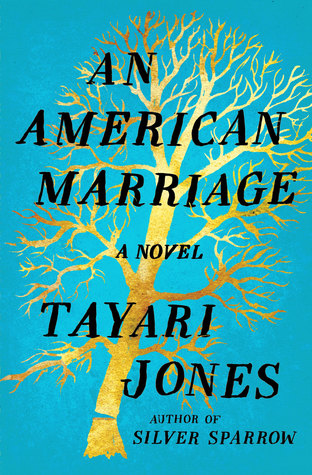
An American Marriage by Tayari Jones
Mar 1, 2019

If I had to choose one word to describe this book, it would be wrenching.
Gut wrenching. Emotionally wrenching. Heart wrenching.
Roy and Celestial have only been married a year-and-a-half when their lives change suddenly and drastically one night. They went to Roy's hometown to visit his parents, and their motel room door was forced open in the middle of the night and they were dragged from their bed. A woman a few doors down claimed that Roy broke into her room and raped her.
But Roy is innocent. He knows it, and, more importantly, his wife knows it. She hadn't even fallen asleep yet when their door burst open.
But the trial proceeds quickly. Unfortunately, Roy is a black man being accused by a white woman, and the timing and the circumstances are not in his favor. Roy is convicted without proper evidence. He is sentenced to prison for twelve years. (Side note: it never explicitly says that Roy's accuser is white. I assumed she was because her word was given more credibility than Celestial's testimony, but some of the women in my book club assumed she was black, so it was somewhat ambiguous. Regardless, Roy was convicted.)
At first, Celestial and Roy are unfailingly loyal to one another, pledging their devotion until either Roy serves out his sentence or his attorney (Celestial's Uncle Banks) gets him acquitted. But as time marches on, Celestial goes on living, and other things (and people) move into take Roy's place. After three years, she writes that she is done with their marriage; she has to move on; she wants to get a divorce. Except . . .months pass, and she never files for a divorce.
When Roy is finally released after five years, he doesn't know what he'll find and if it's even possible for a marriage that was still just in its infancy to be able to survive such a tragedy.
The story is told from three perspectives: Roy's, Celestial's, and Andre's (oh, I didn't mention him? He and Celestial have been friends ever since they were children. I'm sure you can guess why he's in the story . . .). Their voices are distinct, raw, and vivid. I loved the writing so much, and listening to the narration by Sean Crisden and Eisa Davis only enhanced it.
I won't pretend to know what it takes for a novel to move from best-seller to classic, or if the two are even related. But with the words still fresh enough to be ringing in my ears, this feels like the type that might last. I could see it being studied in literature classes decades from now. It just seems to have all of the right pieces to make something that's deep and mulit-layered and will keep giving each time you read it.
That said, I didn't love the ending. And not because it wasn't a happily ever after kind of ending. Celestial and Roy both move forward with their lives. Celestial's seemed natural and expected (probably because a big chunk of the book had been pointing that way), but Roy's seemed unlikely and maybe even fantastical. I'm not going to give it away here, but I'd be interested to know what you thought about it if you've read it. (As another aside, discussing this with the other ladies in my book club actually helped me resolve some of the issues I had with the ending, and I'm not as skeptical as I was when I first finished it.)
This was my book club's pick for February. We always try to select a book for this month that will have something to do with love and relationships. We've had some misses over the years, but this one was spot on perfect. Although there are some underlying themes of racism and equality, the heart of the book is about relationships and what happens to those relationships when life throws its punches.
At one point, Celestial says: "Marriage is like grafting a limb onto a tree trunk. You have the limb, freshly sliced, dripping sap, and smelling of springtime. And then you have the mother tree stripped of her protective bark, gouged and ready to receive this new addition." Part of the problem for Celestial and Roy was that their limb and trunk hadn't been together for long enough before the graft was put under extreme stress.
But back to my original word: wrenching. I became so deeply invested in the characters, and it was painful to watch all of the choices and circumstances play out and just wonder, "What if . . . ?" What if Roy hadn't been convicted? What if he had gotten out sooner? What if he and Celestial had been married longer first? What if? What if? What if?
It was those plaguing questions that kept me listening, and the unsatisfactory answers that kept me thinking long after I finished.
Content note: This is a heavy story. There is some language, including the F-word. There is also infidelity, including one descriptive scene that I chose to skip over.
Educated by Tara Westover
Feb 8, 2019
I don't know how I feel about this book. Maybe I'm writing about it too soon after finishing it. Maybe I should wait until both of my book clubs have discussed it and I've had time to shape my thoughts and let my opinions settle.
But part of me also just wants to get this review over with so I can be free of this book that made me feel so many things, most of them not at all pleasant.
It is the memoir of Tara Westover, the youngest of seven children, who was raised in the shadow of Buck Peak in rural Idaho. She didn't have a birth certificate until she was nine years old. Her mother and father treated all illnesses and injuries (some of them quite significant) at home. Her education was neglected in the name of home schooling.
Her father plays a key role in the way Tara identifies herself. He rules the family with almost prophetic authority, laying down the will of the Lord and admonishing them all to become self-sufficient and prepare for the end of the world. (Ironically, they are members of The Church of Jesus Christ of Latter-day Saints, which is also my religion, but it was almost unrecognizable to me.) (Also ironically, Tara's father is uncannily similar to the father in The Great Alone, and both books happened to be narrated by the same person, which made the resemblance even more striking.)
I spent most of the book cringing. If anyone had looked over at me while I was listening, they most likely would have seen a grimace. The amount of physical injuries that happened in this story was astounding: legs ripped open, faces burned off, wrists cracked. If it had been fiction, I might have said that the author had carried it too far.
But my grimace was for more than the physical pain. First it was for all the things Tara endured as a child (physical abuse by her older brother being the most egregious), but later it was because she just kept going back for more. Even after she received a bachelor's degree and began work on a PhD, she continued to return home where she fell right back into her role as obedient and submissive daughter, always doubting her own memory if it conflicted with that of her parents.
Throughout the book, as Tara explains certain events, she says things like, "My brother, Tyler, remembers this event differently" or "I recorded this experience in my journal, but I have no actual memory of it." Sometimes her journal even revealed two very different versions of the same event. Tara has this habit of pausing the experience and zooming out on the picture and examining it from afar: "I will always remember my father in this moment, the potency of him and the desperation. He leans forward, jaw set, eyes narrow, searching his son's face for some sign of agreement, some crease of shared conviction."
This distrust of her own memory is understandable when, as an intelligent, successful adult, Tara finally confronts her parents about her older brother's abuse and is met with adamant accusations that such allegations are misconstrued and false. She receives no support from them (even as her brother is sitting beside her, whispering threatening things in her ear), and this leads to a complete mental breakdown where she can't cope with real life because she doesn't even know if she's actually living or just imagining it.
It just made me sick. And angry too. I am not saying that this is a completely accurate, unbiased account of Tara's life. It's a memoir, for crying out loud. Of course it's going to be biased. A memoir is not a factual statement. It is a unique individual's perceptions of her own experiences. But when a story is corroborated by multiple people (as Tara's was) and the people who supposedly love her most blatantly disregard it, it is sickening. There is no other word for it.
I did find it curious, however, that anytime she quotes an email or message exchange, she specifically states that it is not a direct quote, but a general recounting of the basic premise. I didn't understand why she wouldn't just quote the actual words rather than reinterpreting them each time. It didn't make me question her accusations, but it made me approach the story a little more cautiously than I might have otherwise.
In tone and content, it reminded me a great deal of both The Glass Castle and Hillbilly Elegy (and also, as mentioned above, but for completely different reasons, The Great Alone). If possible, I think Tara's story is even more horrific than Jeannette Walls' and personally, it gripped me quite a bit more than J.D. Vance's.
I think part of my discomfort with the book was that certain details matched my own upbringing, but everything about it was grotesquely warped. Tara was a member of The Church of Jesus Christ of Latter-day Saints; I am a member of the same church. Tara was home schooled; I was home schooled. Tara's mother used herbal remedies; my mom preferred echinacea to Tylenol when we were sick. So maybe it wasn't just that I was distressed by Tara's story. Maybe I was a little defensive too. It was an example to me that even good things can turn bad when taken to an extreme.
Content note: minimal swearing, but a fair amount of descriptive injuries and abuse
But part of me also just wants to get this review over with so I can be free of this book that made me feel so many things, most of them not at all pleasant.
It is the memoir of Tara Westover, the youngest of seven children, who was raised in the shadow of Buck Peak in rural Idaho. She didn't have a birth certificate until she was nine years old. Her mother and father treated all illnesses and injuries (some of them quite significant) at home. Her education was neglected in the name of home schooling.
Her father plays a key role in the way Tara identifies herself. He rules the family with almost prophetic authority, laying down the will of the Lord and admonishing them all to become self-sufficient and prepare for the end of the world. (Ironically, they are members of The Church of Jesus Christ of Latter-day Saints, which is also my religion, but it was almost unrecognizable to me.) (Also ironically, Tara's father is uncannily similar to the father in The Great Alone, and both books happened to be narrated by the same person, which made the resemblance even more striking.)
I spent most of the book cringing. If anyone had looked over at me while I was listening, they most likely would have seen a grimace. The amount of physical injuries that happened in this story was astounding: legs ripped open, faces burned off, wrists cracked. If it had been fiction, I might have said that the author had carried it too far.
But my grimace was for more than the physical pain. First it was for all the things Tara endured as a child (physical abuse by her older brother being the most egregious), but later it was because she just kept going back for more. Even after she received a bachelor's degree and began work on a PhD, she continued to return home where she fell right back into her role as obedient and submissive daughter, always doubting her own memory if it conflicted with that of her parents.
Throughout the book, as Tara explains certain events, she says things like, "My brother, Tyler, remembers this event differently" or "I recorded this experience in my journal, but I have no actual memory of it." Sometimes her journal even revealed two very different versions of the same event. Tara has this habit of pausing the experience and zooming out on the picture and examining it from afar: "I will always remember my father in this moment, the potency of him and the desperation. He leans forward, jaw set, eyes narrow, searching his son's face for some sign of agreement, some crease of shared conviction."
This distrust of her own memory is understandable when, as an intelligent, successful adult, Tara finally confronts her parents about her older brother's abuse and is met with adamant accusations that such allegations are misconstrued and false. She receives no support from them (even as her brother is sitting beside her, whispering threatening things in her ear), and this leads to a complete mental breakdown where she can't cope with real life because she doesn't even know if she's actually living or just imagining it.
It just made me sick. And angry too. I am not saying that this is a completely accurate, unbiased account of Tara's life. It's a memoir, for crying out loud. Of course it's going to be biased. A memoir is not a factual statement. It is a unique individual's perceptions of her own experiences. But when a story is corroborated by multiple people (as Tara's was) and the people who supposedly love her most blatantly disregard it, it is sickening. There is no other word for it.
I did find it curious, however, that anytime she quotes an email or message exchange, she specifically states that it is not a direct quote, but a general recounting of the basic premise. I didn't understand why she wouldn't just quote the actual words rather than reinterpreting them each time. It didn't make me question her accusations, but it made me approach the story a little more cautiously than I might have otherwise.
In tone and content, it reminded me a great deal of both The Glass Castle and Hillbilly Elegy (and also, as mentioned above, but for completely different reasons, The Great Alone). If possible, I think Tara's story is even more horrific than Jeannette Walls' and personally, it gripped me quite a bit more than J.D. Vance's.
I think part of my discomfort with the book was that certain details matched my own upbringing, but everything about it was grotesquely warped. Tara was a member of The Church of Jesus Christ of Latter-day Saints; I am a member of the same church. Tara was home schooled; I was home schooled. Tara's mother used herbal remedies; my mom preferred echinacea to Tylenol when we were sick. So maybe it wasn't just that I was distressed by Tara's story. Maybe I was a little defensive too. It was an example to me that even good things can turn bad when taken to an extreme.
Content note: minimal swearing, but a fair amount of descriptive injuries and abuse
What I Read in July
Aug 10, 2018
July was a good reading month for me, both in terms of quantity and quality. I was satisfied and content in every way.
1. America's First Daughter by Stephanie Dray and Laura Kamoi
This was my favorite read from July, in part because it suited the month so perfectly (and you all know how I feel about a good, seasonal read).
It is a fictionalized account of Martha "Patsy" Jefferson (Thomas Jefferson's daughter). Her mother passed away when she was just ten years old, but not before securing a promise from Patsy that she would always take care of and protect her father. The promise itself seems fairly innocent on the surface--her father had just lost the love of his life; of course she would want to look after him and help him--but it has far-reaching consequences. Patsy is her father's secret keeper, pushing forward the image that the new nation expects and covering the human foibles that would turn people against him. She gives up her own heart to protect his.
Much of the story is embellished and dramatized for the sake of entertainment, but I found the author's note at the end of the novel to be completely fascinating (and impressive). Every care was taken to make the story as historically accurate as possible, but where facts were not known (in part probably because Patsy herself erased portions of incriminating history), plausible details were inserted. Regardless of what is or is not true, Patsy's life was a tragic one, and at times, the heartache is almost too much to bear.
I listened to this during our trip through the midwest last month (more on that in my next post) and found that this long novel (over 20 hours) was the perfect companion, especially because our trip went over the 4th of July holiday and ended at Mt. Rushmore where we all got a good look at Thomas Jefferson's stony features. In spite of its length, it was a compelling novel that I couldn't seem to listen to fast enough. For those who love historical fiction or emotional drama, I can't recommend it enough.
2. The Willoughbys by Lois Lowry
The Willoughbys are an old-fashioned family of father, mother, three sons, and one daughter. But they are not a happy family. The parents cannot stand the children (they "frequently forgot that they had children and became quite irritable when they were reminded of it"), and the children's feelings are mutual. Thus, they both devise plans to get rid of each other: the children suggest a vacation the parents can't turn down (volcanoes, alligator infested lakes, frozen mountain peaks--all perfect ways for them to meet their end), and the parents sneakily sell their house out from under the children while they're away.
With that brief introduction, I'm sure you can see that this is a morbid, irreverent, and even dastardly wicked plot. Being big fans of Roald Dahl, it's just the kind of book my kids and I love, and it certainly had a lot of potential going into it. However, it lost some momentum for me when it introduced a whole bunch of sub-characters (an abandoned baby, a grief-stricken candy inventor, a no-nonsense nanny, an organizational freak, a lonely boy, and a love-sick postmaster). It was wildly entertaining to see how the different plot lines all eventually entwined with one another, but I think my interest waned because I didn't love some of the characters, but I felt forced to pay attention to them so I wouldn't get lost.
Still though, my kids loved it from beginning to end and always begged for me to read and then keep reading. There's also a delightful glossary (with explanations such as, "Irascible means having outbursts of bad temper. I myself had a very irascible third-grade teacher and it made for a miserable year.") and a bibliography of famous books at the end of the book. And it's Lois Lowry. So you know that even if I'm complaining about the plot, it isn't all bad. Not by a long shot.
3. Jean and Johnny by Beverly Cleary
As a teenager, I remember reading Fifteen by Beverly Cleary and loving it, so I wanted to try one of her other young adult novels (in part, to help fulfill my goal of reading three pre-1970 young adult novels).
I honestly don't know what today's teenager would think about this book. I'm sure they would find it a little bit cheesy and a lot old-fashioned (because I myself kind of felt that way about it), but I wonder if they'd also be able to see past some of those things to the lessons of the story:
5. Courage to Be You: Inspiring Lessons From an Unexpected Journey by Gail Miller
I'm going to be completely honest with this one (even though I'm sure many readers will not share my opinion): the overall message was good, a few of the stories were interesting, and there was a smattering of memorable insights, but from the beginning this felt like a trite and formulaic inspirational read that was only selling copies because of who the author was (wife of Larry H. Miller). Whew, that was a long sentence, but sometimes it's best to just get it all out in one fell swoop.
The writing itself was overly simplistic and bland (despite being co-authored by Jason Wright) and was filled with many self-deprecating statements such as, "My marriage wasn't perfect; I'm not perfect; I might look like I have it all figured out, but I don't." I'm not saying that these statements weren't sincere; they probably were. But the tone just struck me as a little bit lofty even while she was trying very hard not to be.
My favorite chapter was, "Love to Serve--Serve to Love," where she shared this thought, "The only people I don't love are those I don't know yet." That alone was worth reading the book for, and I wish I could keep this statement at the forefront of my mind and really internalize and live it. In spite of not loving this book, I think Gail Miller really exemplifies this and the other principles she attempted to teach, as did her husband, Larry.
6. The Boy on the Porch by Sharon Creech
This was recommended to me by a friend a couple of years ago, but it wasn't until I was searching for an audiobook that was available for immediate download (an increasingly difficult feat) that I remembered it and finally listened to it.
It's a short book, which sometimes makes a story somewhat forgettable, but this one had a sweet poignancy that I think will stay with me. That said, I wouldn't have minded hanging out with the characters for a little longer.
When middle-aged couple, John and Marta, find a boy on their porch one morning, they are surprised and also a little disturbed. Try as they might, they can find no information about the boy save for a cryptic piece of paper from someone (his parents? a guardian?) that says they'll be back for him. What's more, the boy can't (or won't) talk, and so John and Marta are left to deduce as much as they can. Although the whole situation is strange, they both have big hearts that have been longing for a child to love. And so their relationship grows quickly and easily, until one day, when they've begun to assume it will go on like this forever, it comes to an abrupt end.
This novel took an unexpected turn toward foster parenting that I absolutely loved. My cousin and her husband have been foster parents for several years, and after I finished this book, I immediately told her about it. Even though it's a middle-grade book, John and Marta's self-sacrifice and non-judgmental warmth will touch the hearts of children and adults alike. Foster parenting is a roller coaster ride of emotions and is not for the faint of heart. This book celebrates those courageous individuals who are willing to share a piece of their hearts with others.
What have you been reading lately? Have you read any of these books? Tell me in the comments!
1. America's First Daughter by Stephanie Dray and Laura Kamoi
This was my favorite read from July, in part because it suited the month so perfectly (and you all know how I feel about a good, seasonal read).
It is a fictionalized account of Martha "Patsy" Jefferson (Thomas Jefferson's daughter). Her mother passed away when she was just ten years old, but not before securing a promise from Patsy that she would always take care of and protect her father. The promise itself seems fairly innocent on the surface--her father had just lost the love of his life; of course she would want to look after him and help him--but it has far-reaching consequences. Patsy is her father's secret keeper, pushing forward the image that the new nation expects and covering the human foibles that would turn people against him. She gives up her own heart to protect his.
Much of the story is embellished and dramatized for the sake of entertainment, but I found the author's note at the end of the novel to be completely fascinating (and impressive). Every care was taken to make the story as historically accurate as possible, but where facts were not known (in part probably because Patsy herself erased portions of incriminating history), plausible details were inserted. Regardless of what is or is not true, Patsy's life was a tragic one, and at times, the heartache is almost too much to bear.
I listened to this during our trip through the midwest last month (more on that in my next post) and found that this long novel (over 20 hours) was the perfect companion, especially because our trip went over the 4th of July holiday and ended at Mt. Rushmore where we all got a good look at Thomas Jefferson's stony features. In spite of its length, it was a compelling novel that I couldn't seem to listen to fast enough. For those who love historical fiction or emotional drama, I can't recommend it enough.
2. The Willoughbys by Lois Lowry
The Willoughbys are an old-fashioned family of father, mother, three sons, and one daughter. But they are not a happy family. The parents cannot stand the children (they "frequently forgot that they had children and became quite irritable when they were reminded of it"), and the children's feelings are mutual. Thus, they both devise plans to get rid of each other: the children suggest a vacation the parents can't turn down (volcanoes, alligator infested lakes, frozen mountain peaks--all perfect ways for them to meet their end), and the parents sneakily sell their house out from under the children while they're away.
With that brief introduction, I'm sure you can see that this is a morbid, irreverent, and even dastardly wicked plot. Being big fans of Roald Dahl, it's just the kind of book my kids and I love, and it certainly had a lot of potential going into it. However, it lost some momentum for me when it introduced a whole bunch of sub-characters (an abandoned baby, a grief-stricken candy inventor, a no-nonsense nanny, an organizational freak, a lonely boy, and a love-sick postmaster). It was wildly entertaining to see how the different plot lines all eventually entwined with one another, but I think my interest waned because I didn't love some of the characters, but I felt forced to pay attention to them so I wouldn't get lost.
Still though, my kids loved it from beginning to end and always begged for me to read and then keep reading. There's also a delightful glossary (with explanations such as, "Irascible means having outbursts of bad temper. I myself had a very irascible third-grade teacher and it made for a miserable year.") and a bibliography of famous books at the end of the book. And it's Lois Lowry. So you know that even if I'm complaining about the plot, it isn't all bad. Not by a long shot.
3. Jean and Johnny by Beverly Cleary
As a teenager, I remember reading Fifteen by Beverly Cleary and loving it, so I wanted to try one of her other young adult novels (in part, to help fulfill my goal of reading three pre-1970 young adult novels).
I honestly don't know what today's teenager would think about this book. I'm sure they would find it a little bit cheesy and a lot old-fashioned (because I myself kind of felt that way about it), but I wonder if they'd also be able to see past some of those things to the lessons of the story:
- Jean makes almost all of her own clothes because, even though she is just fifteen, her parents expect her to furnish her own wardrobe and handmade clothes are so much cheaper than ready made garments. Even though it would be just the opposite today (I speak from experience that you cannot save money by making your own clothes), the principles of frugality, contentment, and gratitude are still needed.
- Johnny is a real jerk. At first, I thought Beverly Cleary was actually casting him as the perfect male lead, and I was absolutely disgusted. (When Johnny takes Jean out for a soda and makes her listen to his entire radio program with himself as host, I laughed at how ridiculous it was.) But Beverly Cleary comes around, and so does Jean, and I think it would help all teenage girls see through the phoniness of so many boys.
- Jean refuses a kiss on a first date. As someone who held my kisses close, I gave a silent cheer for Jean's level head.
- The family dynamic in Jean's home is sweet: her father and mother sit around in the evenings, meeting their daughters' dates; Jean looks up to her older sister, Sue, and seeks her advice, but then rejects it when it doesn't fit with what she wants to do. It all feels very realistic while at the same time feeling just a little too good to be true.
In spite of my initial reservations, I ended up enjoying this story and wish it was the kind of book teenagers wanted to read today. It is the very definition of wholesome.
4. Wonderstruck by Brian Selznick
This was the book we settled on for our little family book club, and it was a big success. Even Mike, who hasn't read a physical book in probably a couple of years, really liked it and was actually the first one finished with it.
It's definitely a book that must be read, not listened to, because half of the story is told through pictures. Ben's story takes place in 1977, beginning in Gunflint Lake, Michigan and ending in New York City, and is told through words; Rose's story begins in 1927, beginning in Hoboken, New Jersey and also ending in New York City and is told through pictures. It is an interesting format, one that moves along at a rapid pace because you read two pages and then you look at the next twenty.
When we had our book club meeting, I asked everyone to tell us about their favorite moment. Mine was easy. It was the part where the two stories collided, and I turned the page and saw Ben's face for the first time. I think I actually gasped. I probably can't tell you about each person's favorite moment without giving away major parts of the plot, but almost all of them were pictures, which I found so interesting especially since they told me they liked Ben's story (the one told in words) better than Rose's. I think pictures lodge in our memories a little more easily and maybe trigger emotions faster as well.
There are some mature themes with this one, not the least of which is that Ben's mother and father were never married (and Ben never even met his father). Mike and I were a little concerned about this, mostly because six-year-old Bradley was reading it, and we didn't know if we wanted to get into any hard explanations. But adults see very different things than kids, and because this relationship was merely alluded to without going into any sort of detail, it went right over his head. And we let it. Instead we focused on Ben and his adventures in the Museum of Natural History (think From the Mixed Up Files of Mrs. Basil E. Frankweiler) and Rose's loneliness in her quiet, protected world, and we marveled at this masterful storytelling.
5. Courage to Be You: Inspiring Lessons From an Unexpected Journey by Gail Miller
I'm going to be completely honest with this one (even though I'm sure many readers will not share my opinion): the overall message was good, a few of the stories were interesting, and there was a smattering of memorable insights, but from the beginning this felt like a trite and formulaic inspirational read that was only selling copies because of who the author was (wife of Larry H. Miller). Whew, that was a long sentence, but sometimes it's best to just get it all out in one fell swoop.
The writing itself was overly simplistic and bland (despite being co-authored by Jason Wright) and was filled with many self-deprecating statements such as, "My marriage wasn't perfect; I'm not perfect; I might look like I have it all figured out, but I don't." I'm not saying that these statements weren't sincere; they probably were. But the tone just struck me as a little bit lofty even while she was trying very hard not to be.
My favorite chapter was, "Love to Serve--Serve to Love," where she shared this thought, "The only people I don't love are those I don't know yet." That alone was worth reading the book for, and I wish I could keep this statement at the forefront of my mind and really internalize and live it. In spite of not loving this book, I think Gail Miller really exemplifies this and the other principles she attempted to teach, as did her husband, Larry.
6. The Boy on the Porch by Sharon Creech
This was recommended to me by a friend a couple of years ago, but it wasn't until I was searching for an audiobook that was available for immediate download (an increasingly difficult feat) that I remembered it and finally listened to it.
It's a short book, which sometimes makes a story somewhat forgettable, but this one had a sweet poignancy that I think will stay with me. That said, I wouldn't have minded hanging out with the characters for a little longer.
When middle-aged couple, John and Marta, find a boy on their porch one morning, they are surprised and also a little disturbed. Try as they might, they can find no information about the boy save for a cryptic piece of paper from someone (his parents? a guardian?) that says they'll be back for him. What's more, the boy can't (or won't) talk, and so John and Marta are left to deduce as much as they can. Although the whole situation is strange, they both have big hearts that have been longing for a child to love. And so their relationship grows quickly and easily, until one day, when they've begun to assume it will go on like this forever, it comes to an abrupt end.
This novel took an unexpected turn toward foster parenting that I absolutely loved. My cousin and her husband have been foster parents for several years, and after I finished this book, I immediately told her about it. Even though it's a middle-grade book, John and Marta's self-sacrifice and non-judgmental warmth will touch the hearts of children and adults alike. Foster parenting is a roller coaster ride of emotions and is not for the faint of heart. This book celebrates those courageous individuals who are willing to share a piece of their hearts with others.
What have you been reading lately? Have you read any of these books? Tell me in the comments!
What I Read in January
Jan 31, 2018
So, like I said in my previous post, my plan this year is to write monthly recap posts of the books I've finished rather than long, single reviews. I have to admit though, it's rather embarrassing to have it be so blatantly obvious that I only read three books this month. I can do better than that, but here they are nonetheless.
1. Ordinary Grace by William Kent Krueger
This was our first book club pick for 2018 (I mentioned in my last post that my book club votes between three books for each month, so in case you're wondering, the other recommendations for January were When Crickets Cry by Charles Martin and Winter Garden by Kristin Hannah).
I listened to this on our recent road trip to Arizona, and it was nice to be able to devote a chunk of time to it because I couldn't stop listening. The story is told by Frank Drum, and it's his recounting of what happened during the summer of 1961 forty years before when he was thirteen years old. He begins by saying that the summer brought with it many deaths (there was some debate at book club about how many he said and which ones counted in that tally), but one of the deaths is particularly personal and tragic, and the rest of the novel is crafted a bit like a mystery, trying to put the events leading up to it in chronological order and identify possible suspects.
But it's also just about Frankie himself because that summer changed him and made him grow up in a hurry. I mentioned at book club that my favorite relationship in the book was the one between Frankie and his younger brother, Jake. One of my friends said, "Oh, so you like mean older brothers?" And it's true that Frankie does and says a lot of stupid things to Jake, but I guess it felt realistic to me, and underneath it all, I could see that their friendship and love for one another ran deep.
I will caution that the content on this one is a bit dark (it involves a murder), and there is some language as well as immorality (although not explicit). But overall, I found the story to be redemptive, and it made for an easy and thought-provoking discussion at book club.
2. Brighty of the Grand Canyon by Marguerite Henry
It gives me a strange kind of rush to find the perfect book for a trip or holiday or even just a time of life. So you can imagine how happy I was when my sister-in-law, upon hearing that we would be making a stop at the Grand Canyon on our way to see friends in Phoenix, said that we should read Brighty of the Grand Canyon before we went.
It couldn't have been more perfect. I had never been to the Grand Canyon, but as we read, I felt like I could see the warm colors of the canyon and sense the rocky trail beneath my feet and feel the cold wind whipping around the rim. And then, we were there, and it was exactly as I pictured it--so much so that I half expected to see a little gray burro making his way up the canyon wall (and then, by lucky chance, we actually did see a mule caravan crest the top of the rim and parade past us, which was pretty amazing). It was absolutely magical for me, and I think it was for my kids as well.
But even if we hadn't been able to go from the pages in a book to real life natural wonder, we would have still enjoyed this story immensely. It begins with a murder, which made me nervous (I was reading it to my kids, after all!), but it was not graphic, and it was very fulfilling to see the murderer get his due at the end.
Most impressive to me was the way Marguerite Henry cast Brighty as the main character and kept the story interesting while still maintaining Brighty's authenticity as a donkey (in other words, not giving him a lot of human characteristics to help keep up the pace). Everyone, even three-year-old Clark, fell in love with Brighty, and we were all sad for the book to come to an end.
3. Echo by Pam Munoz Ryan
I decided to listen to this one, rather than read it, because the audio version had garnered such high praise from listeners and critics alike (including an Odyssey Honor, which is given to outstanding audio productions).
The story is multi-layered, beginning with Otto Messenger, who accidentally stumbles into three sisters who are trapped in this world because of a curse. They claim that his harmonica is the key to freeing them to return home. The story (and the harmonica) then travel to Friedrich in Germany in 1933, Mike in Pennsylvania in 1935, and Ivy in California in 1942. Each time, it brings light and hope when things feel desperately dismal and scary. And eventually, it ends up in just the right place, at just the right time, and, click, a door is opened.
For the most part, this is a historical fiction novel, but it has just one teeny tiny magical element, and that made me feel a little off balance but in the most delightful way. Friedrich, Mike, and Ivy are talented and courageous and unique. I found myself feeling sad as each story ended only to be excited as I became immersed in the new story. And then the ending tied everything together in a really beautiful way.
Oh, and the audio was definitely the way to go on this one: different narrators for each story and lots of music throughout, which, for a book all about the magic of one harmonica, seemed absolutely perfect.
Did you read anything good this month? Tell me!
1. Ordinary Grace by William Kent Krueger
This was our first book club pick for 2018 (I mentioned in my last post that my book club votes between three books for each month, so in case you're wondering, the other recommendations for January were When Crickets Cry by Charles Martin and Winter Garden by Kristin Hannah).
I listened to this on our recent road trip to Arizona, and it was nice to be able to devote a chunk of time to it because I couldn't stop listening. The story is told by Frank Drum, and it's his recounting of what happened during the summer of 1961 forty years before when he was thirteen years old. He begins by saying that the summer brought with it many deaths (there was some debate at book club about how many he said and which ones counted in that tally), but one of the deaths is particularly personal and tragic, and the rest of the novel is crafted a bit like a mystery, trying to put the events leading up to it in chronological order and identify possible suspects.
But it's also just about Frankie himself because that summer changed him and made him grow up in a hurry. I mentioned at book club that my favorite relationship in the book was the one between Frankie and his younger brother, Jake. One of my friends said, "Oh, so you like mean older brothers?" And it's true that Frankie does and says a lot of stupid things to Jake, but I guess it felt realistic to me, and underneath it all, I could see that their friendship and love for one another ran deep.
I will caution that the content on this one is a bit dark (it involves a murder), and there is some language as well as immorality (although not explicit). But overall, I found the story to be redemptive, and it made for an easy and thought-provoking discussion at book club.
2. Brighty of the Grand Canyon by Marguerite Henry
It gives me a strange kind of rush to find the perfect book for a trip or holiday or even just a time of life. So you can imagine how happy I was when my sister-in-law, upon hearing that we would be making a stop at the Grand Canyon on our way to see friends in Phoenix, said that we should read Brighty of the Grand Canyon before we went.
It couldn't have been more perfect. I had never been to the Grand Canyon, but as we read, I felt like I could see the warm colors of the canyon and sense the rocky trail beneath my feet and feel the cold wind whipping around the rim. And then, we were there, and it was exactly as I pictured it--so much so that I half expected to see a little gray burro making his way up the canyon wall (and then, by lucky chance, we actually did see a mule caravan crest the top of the rim and parade past us, which was pretty amazing). It was absolutely magical for me, and I think it was for my kids as well.
But even if we hadn't been able to go from the pages in a book to real life natural wonder, we would have still enjoyed this story immensely. It begins with a murder, which made me nervous (I was reading it to my kids, after all!), but it was not graphic, and it was very fulfilling to see the murderer get his due at the end.
Most impressive to me was the way Marguerite Henry cast Brighty as the main character and kept the story interesting while still maintaining Brighty's authenticity as a donkey (in other words, not giving him a lot of human characteristics to help keep up the pace). Everyone, even three-year-old Clark, fell in love with Brighty, and we were all sad for the book to come to an end.
3. Echo by Pam Munoz Ryan
I decided to listen to this one, rather than read it, because the audio version had garnered such high praise from listeners and critics alike (including an Odyssey Honor, which is given to outstanding audio productions).
The story is multi-layered, beginning with Otto Messenger, who accidentally stumbles into three sisters who are trapped in this world because of a curse. They claim that his harmonica is the key to freeing them to return home. The story (and the harmonica) then travel to Friedrich in Germany in 1933, Mike in Pennsylvania in 1935, and Ivy in California in 1942. Each time, it brings light and hope when things feel desperately dismal and scary. And eventually, it ends up in just the right place, at just the right time, and, click, a door is opened.
For the most part, this is a historical fiction novel, but it has just one teeny tiny magical element, and that made me feel a little off balance but in the most delightful way. Friedrich, Mike, and Ivy are talented and courageous and unique. I found myself feeling sad as each story ended only to be excited as I became immersed in the new story. And then the ending tied everything together in a really beautiful way.
Oh, and the audio was definitely the way to go on this one: different narrators for each story and lots of music throughout, which, for a book all about the magic of one harmonica, seemed absolutely perfect.
Did you read anything good this month? Tell me!
A Whole Batch of Mini-Reviews
Jan 5, 2018
Desperate times call for desperate measures. Here we are, well into January already, and I still haven't reviewed seven of the books I read in 2017. So I'm lumping them all together in one big post and just sharing a few brief thoughts rather than long rambling opinions.
2. Death at Wentwater Court by Carola Dunn
When I mentioned that I wanted to try a new mystery series as part of my 2017 reading goals, Beth recommended the Daisy Dalrymple series, and I immediately put it on my list. But then a Lord Peter Whimsy mystery went on a great Kindle sale, and Anne Bogel had said you could read that series in any order, so I was just planning on reading that one for my new mystery series.
But then (this is all getting very dramatic), it was mid-December, and I thought I better get started on that mystery. I opened it up and realized (for the first time) that it was 500 pages. And I realized there was no way that was going to happen before the end of the year. So I went back to Daisy Dalrymple, which clocked in at a blessed 250 pages and the audio was available for immediate download on Overdrive, so I went for it.
And I liked it. It was pretty much exactly what I like from a mystery: not too graphic, with likeable characters and the murderer being not too obvious but also not too not obvious (if you know what I mean). In this one, it also helped that the person killed was pretty horrid and despicable, which made you not feel too bad about him being dead.
My one complaint (and this is a sad one) is that I didn't love Daisy Dalrymple. I kind of felt like she was always in the way and maybe begging (whining?) a little too much about helping with the case. I mean, she was the main character and all, so she had to get in on the action somehow, but she grated on me just a bit, but not enough to make me stay away from the rest of this series.
3. The Collapse of Parenting: How We Hurt Our Kids When We Treat Them Like Grown-Ups by Leonard Sax
You want to hear one of my pet peeves? When moms say, "My daughter is my BFF!" I know they mean it in the very best way, as in, "I love my daughter so much, I would rather be with her than any other friend!" That's great, and I believe the relationship can eventually get to that point. But I really think when your daughter is eight is not the best time to be her best friend. (Or maybe I just have a giant chip on my shoulder because I don't have a daughter to be best friends with.)
But I think Dr. Sax would back me up on this one. I could write an entire blog post about this book, no problem. It's a frank, candid discussion about what is causing the culture of disrespect (as well as a host of other problems) in today's teens and young adults, and one of the causes is that parents are trying to be their kids' peers instead of their parents, and so their kids are looking for advice from their actual peers instead of their parents. And that's a big problem because, believe it or not, teenagers actually don't know everything.
The thing I loved about this book though was that Dr. Sax didn't just focus on the problems but also gave three concrete solutions, which I'll share here. What do parents need to do to raise confident, kind, and respectful adults?
6. Sisters by Raina Telgemeier
I thought I was going to need one more quick read in order to meet my numbers goal for the year. As it was, I ended up being fine, but I was grateful for the excuse to read this book.
Picking up soon after her first memoir, Smile, left off, Raina shares her experience of a summer road trip with her family. It's filled with sibling rivalries, the hurt of not fitting in, and a little glimpse of her parents' marital problems.
Raina's books are a brilliant combination of text, illustrations, and perfect layouts. Truly, she's a master at this. One of my favorite spreads is when Raina is falling through space in a dream, wishing all of her family's problems would go away. She says, "Maybe if I wish hard enough, this will all be a dream . . . A dream where someone is going to put their arms around me and tell me . . . " [and then it flashes back to reality in a simple rectangle where they're all in a family hug] "'It's going to be okay.'"
My kids need no pushing or encouraging when it comes to graphic novels. If they see one, they pick it up and read it. So I wasn't reading this book for more than ten minutes before Aaron was trying to steal it from me. Luckily, it's totally appropriate, and I even felt comfortable letting Bradley (age 6) read it, which he promptly did.
7. Glimpses into the Life of Heart of Marjorie Pay Hinckley by Virginia H. Pearce
I spent the entire year reading this book, which was my intention. My focus for the year was to channel my inner Marjorie Pay Hinckley. I wanted to figure out how she got to be who she was and how I could be more like her.
This book was like a drink of cool water. I would dip into it for a couple pages and come away feeling invigorated and inspired. She truly was a remarkable woman who touched the lives of thousands.
I still want to be like her, but reading this book made me realize I'm not her, and I never will be. We have different strengths and weaknesses, and our personalities are unique. That's okay. It was an interesting realization to me--that as much as I might want to be someone else, I am and always will be me. Marjorie Hinckley is a kind of mentor or hero for me. I want to take what I learned about her and apply it to who I am to make me who I want to be.
I think she would approve.
Which books did you finish off 2017 with?
1. Abel's Island by William Steig
Max received this book for the summer reading program and agreed to let me read it, too.
Amanda and Abel are mice--but very sophisticated and refined mice. One day, they decide to go on a picnic in the woods. It is during the first year of their marriage, and they are still beautifully in love. Their sunny picnic takes a tragic turn when a fierce storm comes up and they're forced to find shelter. Amanda's scarf gets whipped away by the wind, and Abel, being the noble husband he is, rushes to save it and is consequently blown away by the gale. The rest of the book is a detailed account of how Abel, born and bread a city mouse, learns to survive in the wilderness and fight his way back to his beloved Amanda.
This story had a dry wit and lofty condescension I absolutely adored. I would have been happy if it had been twice as long just so I could indulge in the writing a bit more. A couple of favorite examples:
"The state of his clothes disturbed him. Damp and lumpy, they no longer had style."
"Abel allowed the compliment to stand. Looking at his own opus, he saw no reason to pretend modesty."We haven't read all of William Steig's books, but all of the ones we've read have been winners.
2. Death at Wentwater Court by Carola Dunn
When I mentioned that I wanted to try a new mystery series as part of my 2017 reading goals, Beth recommended the Daisy Dalrymple series, and I immediately put it on my list. But then a Lord Peter Whimsy mystery went on a great Kindle sale, and Anne Bogel had said you could read that series in any order, so I was just planning on reading that one for my new mystery series.
But then (this is all getting very dramatic), it was mid-December, and I thought I better get started on that mystery. I opened it up and realized (for the first time) that it was 500 pages. And I realized there was no way that was going to happen before the end of the year. So I went back to Daisy Dalrymple, which clocked in at a blessed 250 pages and the audio was available for immediate download on Overdrive, so I went for it.
And I liked it. It was pretty much exactly what I like from a mystery: not too graphic, with likeable characters and the murderer being not too obvious but also not too not obvious (if you know what I mean). In this one, it also helped that the person killed was pretty horrid and despicable, which made you not feel too bad about him being dead.
My one complaint (and this is a sad one) is that I didn't love Daisy Dalrymple. I kind of felt like she was always in the way and maybe begging (whining?) a little too much about helping with the case. I mean, she was the main character and all, so she had to get in on the action somehow, but she grated on me just a bit, but not enough to make me stay away from the rest of this series.
3. The Collapse of Parenting: How We Hurt Our Kids When We Treat Them Like Grown-Ups by Leonard Sax
You want to hear one of my pet peeves? When moms say, "My daughter is my BFF!" I know they mean it in the very best way, as in, "I love my daughter so much, I would rather be with her than any other friend!" That's great, and I believe the relationship can eventually get to that point. But I really think when your daughter is eight is not the best time to be her best friend. (Or maybe I just have a giant chip on my shoulder because I don't have a daughter to be best friends with.)
But I think Dr. Sax would back me up on this one. I could write an entire blog post about this book, no problem. It's a frank, candid discussion about what is causing the culture of disrespect (as well as a host of other problems) in today's teens and young adults, and one of the causes is that parents are trying to be their kids' peers instead of their parents, and so their kids are looking for advice from their actual peers instead of their parents. And that's a big problem because, believe it or not, teenagers actually don't know everything.
The thing I loved about this book though was that Dr. Sax didn't just focus on the problems but also gave three concrete solutions, which I'll share here. What do parents need to do to raise confident, kind, and respectful adults?
- Teach humility
- Enjoy spending time together (which might sound like it runs counter to the "your child is not your best friend" rant, but I promise it doesn't)
- Help them find the meaning of life
That's it. It's more of a big picture parenting book than "tips for dealing with tantrums," but I found it really enlightening and empowering.
4. The Unlikely Romance of Kate Bjorkman by Louise Plummer
Oh this book. I'm embarrassed to even tell you that I read it. But someone had mentioned it on Instagram as a favorite holiday read, and I basically hadn't read any seasonal books in all of December (except to my kids), and it was a young adult novel (which I'd been trying to read more of this year for research's sake), and it was available for immediate download on my kindle, so . . . I picked it up.
And then thirty pages in, I almost put it down because it was just so stupid and I couldn't handle it. (I mean, her best friend is the stereotypical gorgeous, popular girl who gets all the boys and is so rude and expects her to just be a little sidekick until they happen to be interested in the same boy at which point she turns completely nasty. Ugh. So unoriginal and stifling.)
But I ended up finishing it because it was short and took place during Christmastime, which was fun. The one thing that redeemed it for me was that I didn't hate the writing. Kate Bjorkman has decided to write a novel about her Christmas romance, and this book is the rough draft with revisions and funny side notes and very stream of conscious writing. I actually thought it was pretty clever, so I'll give it a few points for creativity while admitting that the actual plot was rather shallow and silly.
5. The Forgotten Carols by Michael McLean
Some families do an annual reading of A Christmas Carol or The Gift of the Magi. In my family, my dad always read The Forgotten Carols to us--a sweet story about an old man who shares his memories of Christmases past through a collection of forgotten Christmas carols.
I have such fond memories of listening to my dad read to us while traveling in the car, always pausing to listen to the appropriate songs as they came up in the story.
Since moving away from home, I hadn't read the story again, but this year, I finally decided to introduce the tradition to my kids.
I'm not sure if we'll read it every Christmas (my guess is, probably not because I have so many books I want to read to them), but it brought back great memories for me. I found myself reading sentences with the same inflections and emphases as my dad, and it kind of felt like things had come full circle.
6. Sisters by Raina Telgemeier
I thought I was going to need one more quick read in order to meet my numbers goal for the year. As it was, I ended up being fine, but I was grateful for the excuse to read this book.
Picking up soon after her first memoir, Smile, left off, Raina shares her experience of a summer road trip with her family. It's filled with sibling rivalries, the hurt of not fitting in, and a little glimpse of her parents' marital problems.
Raina's books are a brilliant combination of text, illustrations, and perfect layouts. Truly, she's a master at this. One of my favorite spreads is when Raina is falling through space in a dream, wishing all of her family's problems would go away. She says, "Maybe if I wish hard enough, this will all be a dream . . . A dream where someone is going to put their arms around me and tell me . . . " [and then it flashes back to reality in a simple rectangle where they're all in a family hug] "'It's going to be okay.'"
My kids need no pushing or encouraging when it comes to graphic novels. If they see one, they pick it up and read it. So I wasn't reading this book for more than ten minutes before Aaron was trying to steal it from me. Luckily, it's totally appropriate, and I even felt comfortable letting Bradley (age 6) read it, which he promptly did.
7. Glimpses into the Life of Heart of Marjorie Pay Hinckley by Virginia H. Pearce
I spent the entire year reading this book, which was my intention. My focus for the year was to channel my inner Marjorie Pay Hinckley. I wanted to figure out how she got to be who she was and how I could be more like her.
This book was like a drink of cool water. I would dip into it for a couple pages and come away feeling invigorated and inspired. She truly was a remarkable woman who touched the lives of thousands.
I still want to be like her, but reading this book made me realize I'm not her, and I never will be. We have different strengths and weaknesses, and our personalities are unique. That's okay. It was an interesting realization to me--that as much as I might want to be someone else, I am and always will be me. Marjorie Hinckley is a kind of mentor or hero for me. I want to take what I learned about her and apply it to who I am to make me who I want to be.
I think she would approve.
Which books did you finish off 2017 with?
How to Manage Your Home Without Losing Your Mind by Dana K. White
Dec 8, 2017
At the beginning of the year, I made a goal to read the cleaning book of all cleaning books, Home Comforts by Cheryl Mendelson. Clocking in at nearly 1000 pages, I was pretty sure it would solve all of my cleaning woes. But after reading the first one hundred pages and feeling distinctly more depressed than inspired and realizing it was going to take me another fifty hours of my life to finish reading about how we needed to use two forks, a cloth napkin, and the second best china at every meal, I made the conscientious decision to abandon it.
But I couldn't abandon the goal--and not just because abandoning a goal would go against my very nature. I needed real help, something that would alleviate the daily chaos that is my current life.
A couple of weeks later, I happened to read this post where Torrie briefly mentioned the book, How to Manage Your Home Without Losing Your Mind, and I thought, That sounds helpful, and then I saw the cover (<---), and I knew I'd landed on the right book at the right time.
(But apparently, everyone else thought so too since this book was extremely difficult to get (and keep) from the library.)
When Dana White began her blog, A Slob Comes Clean, she did so under the pen name Nony (short for Anonymous) because who wants to actually admit that they're a slob? But over time, she came to own it for what it was and, more importantly, overcome it. Her secret was two-fold: She implemented little non-negotiable routines into her day, and she relentlessly purged her stuff.
I loved this book--not only because it gave me the hope and the tools to improve my life but also because it didn't completely pulverize my self-esteem the way the other cleaning book had. In fact, as I started reading, I realized maybe I wasn't such a bad housekeeper after all. Dana's first suggestion was to do the dishes. Just do the dishes right now. And then do them the next day. And the day after that. No matter what other catastrophes are going on in your house, just do the dishes every day.
But guess what? I already do the dishes every day. It is rare for them to ever pile up into a heap so daunting I'd rather throw them all away and start over than bring myself to tackle them. In fact, I don't know if I've ever confronted a dishes problem like the one Dana described in this book.
But the point isn't actually doing the dishes. In Dana's words, "If your dishes are always clean, don't switch to my method of doing them. Choose something that's a problem in your own home."
And immediately, I knew what that was for me: clearing and wiping down the table and counters in the morning. It is something that is so simple (probably too simple since it seems like other things always take priority over it), but it makes a huge difference to my mental health to get home from school drop off and walk into a kitchen with clean counter tops. It's not that it was a problem of the magnitude Dana was describing, but when my kitchen counters stay crumb-ridden throughout the day, it colors my whole attitude toward myself and my house. And it only takes me five minutes to wipe down everything. Five minutes! My sanity is worth five minutes.
So that was one routine I immediately added to my morning schedule.
But I think reading this book made me realize that while my house often looks like a slob (actually, seven slobs) lives here, I am not a slob at heart. If I lived by myself, I would not be a slob. And I have proof of this. As a freshman in college, my roommate and I were both very tidy. We made our beds every day. We kept our desks clear and organized. We did our laundry promptly, long before we ran out of clean underwear, and our floor was never strewn with cast off clothes. Our tiny dorm room was a haven, and friends would actually stop by just so they could enjoy being in a clean space for a few minutes. That's what I'm like when I live alone.
But having five kids has changed me. In the last three years especially, it has felt nearly impossible to stay on top of the chores and the messes and clutter. In fact, the only time my house stays clean is when I follow my kids around, quietly straightening and cleaning in their wake. But, believe it or not, this is not how I want to spend every waking minute of my day.
Dana is quick to point out that you can't blame your family for your messy house. It's unfair for me to say, "I'm not a slob! It's my kids!" Especially since my bedroom is often just as messy as theirs (but of course, I have my totally legitimate excuses). I think my point is just that it was somewhat validating to read this book and realize, "Oh yeah, I gravitate toward good routines that produce a clean environment." The problem is I think I've been trying to do things the same way I did when we were a much smaller family. I haven't changed and tweaked our routines as much as I should have to fit with our new family dynamic.
Case in point: the laundry. My arch nemesis. The bane of my existence. It seems we always have a million baskets scattered around the house: dirty laundry waiting to be washed, clean laundry waiting to be folded, with no end. Ever. When Dana started in on the laundry chapters, I could feel myself zoning out because she was pushing for a Laundry Day. That's not a new idea, and it's something I'd already considered and rejected several times. A Laundry Day just wouldn't work for our family because we have so. much. laundry. The thought of a week's worth of dirty laundry literally made me feel sick.
But then she said something like, "Depending on the size of your family, you may have to have more than one Laundry Day," and it was like the light flashed on and I thought, I can have two Laundry Days? Is that allowed? And suddenly, I could see exactly how Laundry Day could work for our family. I realized that the beauty of Laundry Day was that it had a beginning and an end with a blessed break in the middle. And whether that was all of the laundry on Monday or all of the laundry on Tuesday and then again on Friday, it would still have the same benefits.
It's too soon to tell for sure, but this has felt like one of the easiest routines I've ever implemented, and so I'm hopeful that means it will stick.
Maybe this book is full of genius information (Slob Vision, Dirty Dishes Math, and the Clutter Threshold are revolutionary ideas, I'm sure), but maybe, just maybe, this was the right book for me to read right now. It was simple, repetitive, and funny, but mostly it was just so so realistic. Rather than talking down to me, I felt like Dana was in my corner, lamenting and commiserating but also cheering me on. I can do this! I can make changes and set up routines and get rid of stuff so we can live a happier, lighter life. I still don't know how to fold a fitted sheet (one of the things I was hoping to learn from Home Comforts), but I know how to stay on top of the laundry.
And that's a big win.
But I couldn't abandon the goal--and not just because abandoning a goal would go against my very nature. I needed real help, something that would alleviate the daily chaos that is my current life.
A couple of weeks later, I happened to read this post where Torrie briefly mentioned the book, How to Manage Your Home Without Losing Your Mind, and I thought, That sounds helpful, and then I saw the cover (<---), and I knew I'd landed on the right book at the right time.
(But apparently, everyone else thought so too since this book was extremely difficult to get (and keep) from the library.)
When Dana White began her blog, A Slob Comes Clean, she did so under the pen name Nony (short for Anonymous) because who wants to actually admit that they're a slob? But over time, she came to own it for what it was and, more importantly, overcome it. Her secret was two-fold: She implemented little non-negotiable routines into her day, and she relentlessly purged her stuff.
I loved this book--not only because it gave me the hope and the tools to improve my life but also because it didn't completely pulverize my self-esteem the way the other cleaning book had. In fact, as I started reading, I realized maybe I wasn't such a bad housekeeper after all. Dana's first suggestion was to do the dishes. Just do the dishes right now. And then do them the next day. And the day after that. No matter what other catastrophes are going on in your house, just do the dishes every day.
But guess what? I already do the dishes every day. It is rare for them to ever pile up into a heap so daunting I'd rather throw them all away and start over than bring myself to tackle them. In fact, I don't know if I've ever confronted a dishes problem like the one Dana described in this book.
But the point isn't actually doing the dishes. In Dana's words, "If your dishes are always clean, don't switch to my method of doing them. Choose something that's a problem in your own home."
And immediately, I knew what that was for me: clearing and wiping down the table and counters in the morning. It is something that is so simple (probably too simple since it seems like other things always take priority over it), but it makes a huge difference to my mental health to get home from school drop off and walk into a kitchen with clean counter tops. It's not that it was a problem of the magnitude Dana was describing, but when my kitchen counters stay crumb-ridden throughout the day, it colors my whole attitude toward myself and my house. And it only takes me five minutes to wipe down everything. Five minutes! My sanity is worth five minutes.
So that was one routine I immediately added to my morning schedule.
But I think reading this book made me realize that while my house often looks like a slob (actually, seven slobs) lives here, I am not a slob at heart. If I lived by myself, I would not be a slob. And I have proof of this. As a freshman in college, my roommate and I were both very tidy. We made our beds every day. We kept our desks clear and organized. We did our laundry promptly, long before we ran out of clean underwear, and our floor was never strewn with cast off clothes. Our tiny dorm room was a haven, and friends would actually stop by just so they could enjoy being in a clean space for a few minutes. That's what I'm like when I live alone.
But having five kids has changed me. In the last three years especially, it has felt nearly impossible to stay on top of the chores and the messes and clutter. In fact, the only time my house stays clean is when I follow my kids around, quietly straightening and cleaning in their wake. But, believe it or not, this is not how I want to spend every waking minute of my day.
Dana is quick to point out that you can't blame your family for your messy house. It's unfair for me to say, "I'm not a slob! It's my kids!" Especially since my bedroom is often just as messy as theirs (but of course, I have my totally legitimate excuses). I think my point is just that it was somewhat validating to read this book and realize, "Oh yeah, I gravitate toward good routines that produce a clean environment." The problem is I think I've been trying to do things the same way I did when we were a much smaller family. I haven't changed and tweaked our routines as much as I should have to fit with our new family dynamic.
Case in point: the laundry. My arch nemesis. The bane of my existence. It seems we always have a million baskets scattered around the house: dirty laundry waiting to be washed, clean laundry waiting to be folded, with no end. Ever. When Dana started in on the laundry chapters, I could feel myself zoning out because she was pushing for a Laundry Day. That's not a new idea, and it's something I'd already considered and rejected several times. A Laundry Day just wouldn't work for our family because we have so. much. laundry. The thought of a week's worth of dirty laundry literally made me feel sick.
But then she said something like, "Depending on the size of your family, you may have to have more than one Laundry Day," and it was like the light flashed on and I thought, I can have two Laundry Days? Is that allowed? And suddenly, I could see exactly how Laundry Day could work for our family. I realized that the beauty of Laundry Day was that it had a beginning and an end with a blessed break in the middle. And whether that was all of the laundry on Monday or all of the laundry on Tuesday and then again on Friday, it would still have the same benefits.
It's too soon to tell for sure, but this has felt like one of the easiest routines I've ever implemented, and so I'm hopeful that means it will stick.
Maybe this book is full of genius information (Slob Vision, Dirty Dishes Math, and the Clutter Threshold are revolutionary ideas, I'm sure), but maybe, just maybe, this was the right book for me to read right now. It was simple, repetitive, and funny, but mostly it was just so so realistic. Rather than talking down to me, I felt like Dana was in my corner, lamenting and commiserating but also cheering me on. I can do this! I can make changes and set up routines and get rid of stuff so we can live a happier, lighter life. I still don't know how to fold a fitted sheet (one of the things I was hoping to learn from Home Comforts), but I know how to stay on top of the laundry.
And that's a big win.
The Alchemist by Paulo Coelho
Nov 28, 2017
Mike read this several years ago, and I remember the one thing he said when he was finished was, "It seemed like the story was created for the sole purpose of sharing an allegory."
In other words, it was a little contrived, maybe even to the point that if you stripped away all of the life lessons, you wouldn't be left with much of a story.
With that less-than-glowing recommendation, I didn't rush out to read it. But when it was chosen for my book club, I was optimistic. I knew many readers who claimed it among their favorites. Maybe I would be one of them. At any rate, it was short, and sometimes a short book is a blessing.
It is the story of Santiago (I listened to the whole book and didn't realize that was his name until I went to book club), a young shepherd, who decides to leave his flock in Spain in search of an elusive treasure in Egypt. Along his journey, he meets several wise mentors who offer him counsel about the value of pursuing his personal legend. In the end, he finds his treasure but not where he expected.
I think I came away from the book with similar feelings to Mike. All of the lessons and morals are right there in front . . . with flashing lights around them . . . and a giant arrow pointing them out . . . absolutely impossible to miss. The story itself just kind of limps along behind.
But even though it wasn't the most subtle of allegories, I still found myself jotting down quotes--things I wanted to remember or ponder or discuss with my book club.
For example, Santiago works for a crystal merchant for nearly a year to earn and save money for his journey. The crystal merchant has always dreamed of traveling to Mecca and has a pile of money saved for just this purpose, but he admits that he'll probably never go because "I'm afraid that if my dream is realized, I'll have no reason to go on living." This hit me hard. As someone who loves the anticipation almost more than the realization, I can see myself doing something similar--leaving my dreams as exactly that--dreams--so I'll have something to continue to look forward to. And I think I'm always a little worried that whatever I'm dreaming about won't turn out to be as amazing as I'm imagining it to be, and I don't want to be disappointed.
The flip side to this is that I'm also extremely anxious about bad things happening in the future. I dread the unknown horrible event that is surely just around the corner, and I resist making any changes to my life that might possibly bring any of those imaginings to fruition. At one point, Santiago talks to a camel driver and asks him if he is afraid of the looming war. The camel driver answers: "Because I don't live in either my past or my future, I'm interested only in the present. If you can concentrate only on the present. you'll be a happy man." And Melchizedek, the seer, counsels him: "If good things are coming, they will be a pleasant surprise. If bad things are, and you know in advance, you will suffer greatly before they even occur."
I believe that both of those statements are true, but another part of me wants to cry out, like Santiago: "My heart's afraid it'll have to suffer!" And I love what the alchemist counters with: "Tell your heart that the fear of suffering is worse than the suffering itself and that no heart has ever suffered when it goes in search of its dreams because every second of the search is a second encounter with God and with eternity."
That advice resonated deeply with my personal belief that my life here on earth is but one step in my eternal progression to become more like my Heavenly Father. It's hard for me to keep that perspective at the front of my mind though when the physical cares and pressures and heartache of this life press down upon me (which makes it sound like my life is really hard, and it's not--at least not right now--but I'm always worrying that it's going to be).
Anyway, I guess what I'm trying to say is that even though the story itself felt somewhat pedantic, I could overlook most of that because I came away with new insights and a renewed desire to pursue my ambitions and dreams.
What was your greatest takeaway from this book? Were you disappointed by the lack of plot or inspired by the many moralistic lessons?
In other words, it was a little contrived, maybe even to the point that if you stripped away all of the life lessons, you wouldn't be left with much of a story.
With that less-than-glowing recommendation, I didn't rush out to read it. But when it was chosen for my book club, I was optimistic. I knew many readers who claimed it among their favorites. Maybe I would be one of them. At any rate, it was short, and sometimes a short book is a blessing.
It is the story of Santiago (I listened to the whole book and didn't realize that was his name until I went to book club), a young shepherd, who decides to leave his flock in Spain in search of an elusive treasure in Egypt. Along his journey, he meets several wise mentors who offer him counsel about the value of pursuing his personal legend. In the end, he finds his treasure but not where he expected.
I think I came away from the book with similar feelings to Mike. All of the lessons and morals are right there in front . . . with flashing lights around them . . . and a giant arrow pointing them out . . . absolutely impossible to miss. The story itself just kind of limps along behind.
But even though it wasn't the most subtle of allegories, I still found myself jotting down quotes--things I wanted to remember or ponder or discuss with my book club.
For example, Santiago works for a crystal merchant for nearly a year to earn and save money for his journey. The crystal merchant has always dreamed of traveling to Mecca and has a pile of money saved for just this purpose, but he admits that he'll probably never go because "I'm afraid that if my dream is realized, I'll have no reason to go on living." This hit me hard. As someone who loves the anticipation almost more than the realization, I can see myself doing something similar--leaving my dreams as exactly that--dreams--so I'll have something to continue to look forward to. And I think I'm always a little worried that whatever I'm dreaming about won't turn out to be as amazing as I'm imagining it to be, and I don't want to be disappointed.
The flip side to this is that I'm also extremely anxious about bad things happening in the future. I dread the unknown horrible event that is surely just around the corner, and I resist making any changes to my life that might possibly bring any of those imaginings to fruition. At one point, Santiago talks to a camel driver and asks him if he is afraid of the looming war. The camel driver answers: "Because I don't live in either my past or my future, I'm interested only in the present. If you can concentrate only on the present. you'll be a happy man." And Melchizedek, the seer, counsels him: "If good things are coming, they will be a pleasant surprise. If bad things are, and you know in advance, you will suffer greatly before they even occur."
I believe that both of those statements are true, but another part of me wants to cry out, like Santiago: "My heart's afraid it'll have to suffer!" And I love what the alchemist counters with: "Tell your heart that the fear of suffering is worse than the suffering itself and that no heart has ever suffered when it goes in search of its dreams because every second of the search is a second encounter with God and with eternity."
That advice resonated deeply with my personal belief that my life here on earth is but one step in my eternal progression to become more like my Heavenly Father. It's hard for me to keep that perspective at the front of my mind though when the physical cares and pressures and heartache of this life press down upon me (which makes it sound like my life is really hard, and it's not--at least not right now--but I'm always worrying that it's going to be).
Anyway, I guess what I'm trying to say is that even though the story itself felt somewhat pedantic, I could overlook most of that because I came away with new insights and a renewed desire to pursue my ambitions and dreams.
What was your greatest takeaway from this book? Were you disappointed by the lack of plot or inspired by the many moralistic lessons?
Subscribe to:
Posts (Atom)